How a group of students took charge of 20 national societies
A wave of seemingly coordinated takeovers angered student communities.
Note: names followed by an asterisk have been changed to preserve the anonymity of students.
A group of students have been taking up committee positions in many of Imperial’s cultural and national societies simultaneously, starting in 2023. As of early November 2025, 20 of the College’s national societies had at least one committee member that served on the committee of five or more different national societies, according to the Union website.
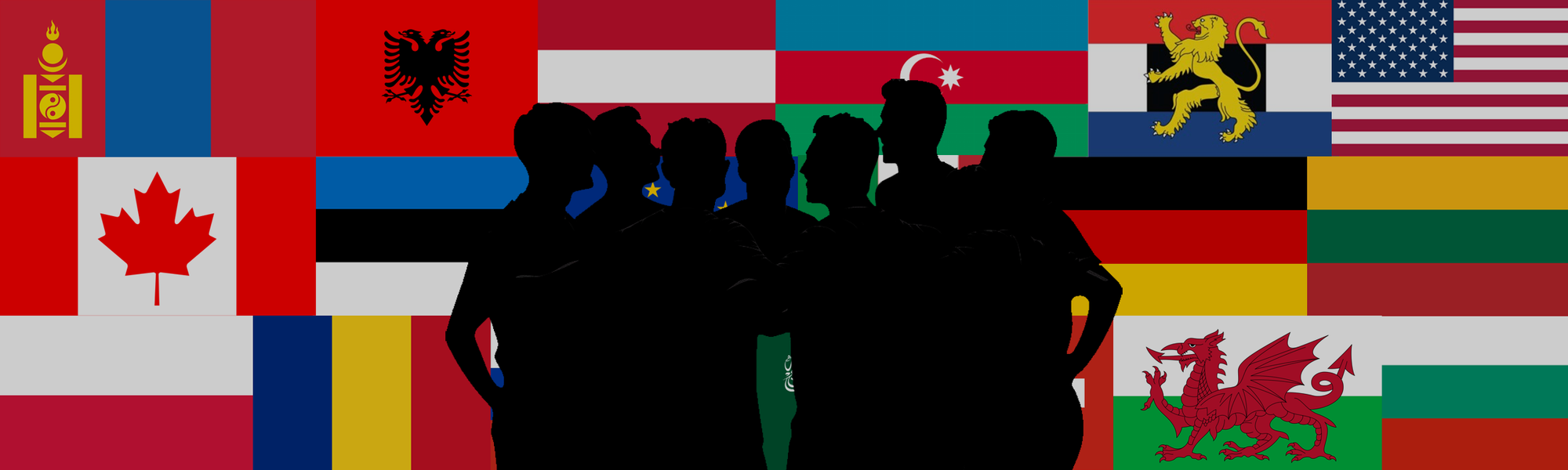
Nine students held four or more committee positions in national societies, with one individual holding 11, two holding nine, and two others holding eight and seven positions respectively. Taken as a whole, these students had roles across twenty societies, namely Albanian, Austrian, Azerbaijani, Benelux, Bulgarian, Canadian, Estonian, European, German, Italian, Lithuanian, Northern, Polish, Romanian, Russian Speaking, Saudi, Swiss, USA, Welsh and Korean societies.
Micheal*, one of these students, held no less than 23 committee positions as of August 2025, when Felix began this investigation, although he currently holds none. This included seven chair or vice-chair roles.
“My involvement in cultural societies has consistently been driven by a commitment to fostering inclusive, welcoming environments and keeping societies active, particularly where engagement was low or committees risked being unfilled,” Micheal told Felix. “I would like to point out that almost all of the positions on cultural society committees (15 out of 19, to be exact) to which I had been elected were uncontested and would have otherwise remained vacant.
“My work on society committees has always been underpinned by a firm belief that cultural societies should be open to all students with an interest in a culture, regardless of ethnicity, background, or language proficiency. This reflects both the Union’s stated values and the purpose of cultural societies as inclusive communities rather than exclusive clubs.”
The societies
“If you have 20 votes or 30 votes, you’re basically guaranteed to win [a society’s presidency],” Emilio*, a former Italian committee member, told Felix, “because the active members [within a national society] are like half of the actual members, and the people who spend time voting and choosing are way less than 30.”
Last year, students who had allegedly not been involved in the Italian society were voted into committee positions. “20 friends from the same degree just joined the society in time to be able to vote,” Emilio remembered. “They just nominated each of them for a different position and then voted themselves across this position.”
Emilio says some new committee members proved uninterested and incompetent, adding there was “no continuity” with projects started by the previous committee. “They don’t even speak Italian,” he said, “so they ignore the emails [from other Italian groups]”.
Other student groups approached by Felix shared similar concerns – a group of previously uninvolved students joined the society en masse before elections, and obtained a large share of the vote. Data extracted from eActivities and shared to the Union by the Russian Speaking Society showed spikes in new membership in the period leading to student group election periods.
“One of the people doing the whole election manipulation essentially applied to be the chair of the [Estonian] society and then had a bunch of his friends join the society,” said Andreas Simson, the former President of the Estonian Society. “And then they essentially just outvoted us.” The committee was used to “joke candidates,” but this time it was “more organised,” Simson recalled.
“It’s not been a massive deal for us,” Simson said, explaining that the Estonian community “never really interacted a lot” with the Union. “But it would be still nice to have the Estonian society not be represented by just random people.”
Krzysztof Kwiatkowski, a former President of the Polish Society, remembers this happening to his community. Krzysztof pointed out that committee roles can comes with desirable perks – for instance the President of the Polish Society is traditionally invited each year by the Polish embassy to an official reception.
A member of the European Society also told Felix that a representative for EU delegation to the UK asked him whether Micheal was part of the society’s committee.
Other students told Felix that the group representing their culture sunk into inaction after students running for or holding multiple roles across national societies were elected to its committee.
The students
“This whole idea was part of forming some kind of cult,” Josh* a student who was once a committee member for nine national societies, told Felix. Micheal allegedly asked him for help running numerous societies. “He has a passion for being a leader,” Josh told us. Micheal allegedly instructed Josh to join multiple societies and reimbursed the membership fees. Josh was then allegedly told to run for committee positions within these societies and won a handful of the elections, despite not knowing members. “He [Micheal] was doing the voting,” Josh alleges.
Josh says he initially believed in Micheal’s vision, but became disillusioned when complaints trickled in. “It’s not to the student’s satisfaction, from what I can gather,” he reflected. Now, he says he doesn’t want to be associated with Micheal anymore and wishes to step down from his roles. He confided that he “realistically [...] wouldn’t have the time” to run the many societies he has a role in.
“I categorically deny instructing students to join societies, to run for committee positions, or to vote for designated candidates,” Micheal told Felix. “I have never coordinated voting, directed outcomes, or organised groups of people to influence elections. Whilst I have encouraged people who independently expressed interest to engage with society life, particularly to prevent societies from becoming inactive or closing, encouragement of participation or expressing personal support is not the same as manipulation, and I reject any suggestion otherwise.”
Micheal, who rejects calls of “cult-like” behaviour, also said he had a “personal falling out” with Josh, saying, “I reject the implication that his testimony represents an unbiased, independent or complete account of events, and I believe relevant interpersonal context has been omitted.”
Another student interviewed by Felix, Marc*, held committee positions in four national societies, having allegedly been instructed by Micheal to run for two of these. “Everything I did was in good faith,” he said, adding that he never received payment.
Marc initially thought Micheal was genuinely committed to reviving some of Imperial’s “inactive” national societies, telling us that Micheal spent significant amounts of his own money to organise events. As some students started filing complaints against committees in which he sat, Marc realised that not all of the student groups had been inactive, calling the massive takeover “misguided ambition.” He admitted he hadn’t done much in two of his roles. “It was easy to mislead us,” he reflected.
Felix was shown a screenshot of messages reportedly sent by Micheal to a WhatsApp group thought to be used by his acquaintances.
The series of messages reads: “Okay guys. / So the Union [...] has removed me from all cultural society positions and revoked my membership. / I’m going to hope for the best-case scenario here and predict that they will let me run again. / Therefore, please urgently [bold] get all these memberships.”
The next messages Michael sent listed 23 national societies, followed by the conclusion: “This is a combined £12, I will send it to you.” Felix understands that this screenshot was sent to the Union as evidence that Micheal had been incentivising students to join societies by reimbursing membership fees.
Micheal said to Felix, “I want to be absolutely clear: I have never paid anyone, reimbursed membership fees, or offered any financial incentive to join societies, stand for committee positions, or vote in any particular way. Any such allegations are blatantly false.”
Action taken
As a result of these takeovers, some international communities say they have created their own underground groups which aren’t affiliated with the Union, depriving them of visibility, legitimacy, and funding. Many have also been fighting back.
“We argued against it quite vigorously,” said Simson, referring to the hijacked committee. “[We] took it up with the Union and the Union was hesitant to do much.”
Imperial’s Student Code on Conduct sets out broad rules on what can constitute misconduct, including “disruption of, or improper interference with, the academic, administrative, sporting, social or other activities of the College or Imperial College Union.” Students should also “take responsibility for their behaviour and their impact on others.”
According to Union’s Autumn Elections candidate pack and rules, candidates can run for a maximum of three principal club and society positions (i.e., Chair, Treasurer or Secretary) and any number of non-principal club and society positions.
“I have to give my commendation to these people doing this is that they read the bylaws of the Union very well and they figured out a way to do this without getting flagged,” commented Simson. “It’s hard for the Union to act because they technically aren’t breaking any laws, they’re just going against the spirit of the bylaws.”
Votes of no confidence (VoNCs) were brought against the new committees of the Russian, Welsh, and Australian societies. At the time of the VoNCs, each of these societies’ committees had students that were involved in multiple other national societies.
The Union removed three committee members from the Russian-speaking society on October 16th, believing the students “took a coordinated action with the main goal of holding as many roles as possible.”
On Thursday 13th November, three committee members from the Welsh society were removed during the Activities Forum by a vote of no-confidence. Luke Humprey of Welsh society told Felix “hostile takeovers” were “incredibly easy to do” in small societies. “I believe this to be undemocratic and shows a major flaw in the way elections are conducted,” he added. “Welsh soc has struggled for a while to stay afloat and issues like this certainly do not help.”
Both Krzysztof from the Polish society and Emilio from Italian society cited Brexit as a long-term cause of this issue, noticing it had damaged the European communities at Imperial.
Yet criticism of the Union’s processes was also a recurrent theme when Felix interviewed outcast former committee members.
“A VoNC implies existence of vote of confidence,” said Krzysztof. “It must be given by the same body that gives the vote of confidence. The problem with the Union is that the VoNC is not a VoNC but a disciplinary procedure.
“The Activities Team are following a policy of stripping members and committees of Constituent Clubs & Societies of both autonomy and responsibility, yet refuse to accept that responsibility or enact change themselves when crises occur. By prioritizing the avoidance of liability over the best interests of CSP members, the Union has found itself in a bureaucratic deadlock. Through inaction, this has allowed blatant abuse of the elections system while simultaneously crushing bottom-up initiatives to rectify the problem.”
An Imperial College Union spokesperson said: “We cannot comment on details of any individual cases to protect the confidentiality of students involved.
“The Union recognises the importance of integrity in all elections and we take all allegations concerning the integrity of our democratic processes extremely seriously. We have an established elections complaints process and would encourage students with any evidence of electoral misconduct to raise this during elections so they can be formally investigated.
“We are committed to supporting all clubs and societies to build fun and inclusive communities that serve their members. Any group experiencing governance difficulties, or who would like assistance with their group, is encouraged to contact the Union for support.”