How Andes virus broke the rules
Understanding the recent MV Hondius outbreak reveals how viruses can adapt to new hosts.
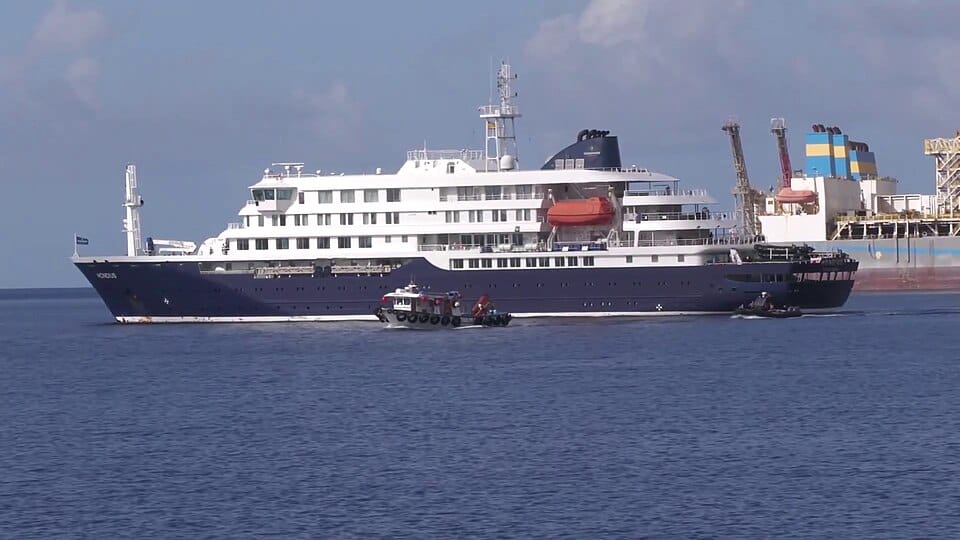
April 2026, an outbreak of Andes virus was identified aboard the Dutch cruise ship MV Hondius. Eleven confirmed cases and two suspected cases have been linked to the outbreak, with the US Center for Disease Control and Prevention (CDC) stating the risk to the public remains extremely low. What makes the MV Hondius outbreak scientifically interesting is less the outbreak itself, but that it provides a rare opportunity to study how one of the world’s esoteric hantaviruses moves through a closed population.
Explore the different tabs below to find the explanations and Imperial expert's opinions on the most common questions regarding this outbreak!
What are hantaviruses?
There are two distinct types of diseases caused by hantaviruses. First, hemorrhagic fever with renal syndrome (HFRS), which is usually caused by ‘Old World’ strains found in Europe and Asia, causes bleeding and kidney failure. Hantavirus pulmonary syndrome (HPS) is caused by strains of hantavirus from the ‘New World’ (including Andes virus, the one responsible for the current outbreak) and is endemic in the Americas. This disease initially causes flu-like symptoms which progress to a life-threatening phase in which the capillaries leak blood into the lungs.
Although these two syndromes affect different organs, they share a core mechanism: hantaviruses infect the cells lining small blood vessels, with the host’s immune system triggering blood leakage from these infected vessels into the body’s tissues. The symptoms are therefore caused by the immune response, not the virus directly. Professor Peter Openshaw, a lung specialist and immunologist at Imperial, says that “it’s relatively recently that we’ve discovered that inflammatory responses to viruses are key to how they cause disease. We saw this effect during the swine flu pandemic in 2009, and even more clearly during COVID-19. Treating the viral infection only works if you intervene very early. After that, the most effective treatments for COVID were directed at the immune response.”
How are hantaviruses transmitted?
Usually, hantaviruses are transmitted by inhalation of microscopic particles of rat urine or faeces. As Prof. John Lednicky from the University of Florida College of Public Health describes: “Rats jump on ships or are carried onto them in cargo, they poop and pee, air currents aerosolise it, carry it, and it can get in the lungs.” The virus can also be spread through rodent bites via their saliva, but this is rare.
Transmission usually requires the disturbance of contaminated material in poorly ventilated spaces, which explains why farming, forestry work, and sleeping in rodent-infested dwellings constitute higher risk activities for contracting the virus – and why the recent outbreak of Andes virus on a luxury cruise ship is so surprising.
How is Andes virus different from other hantaviruses?
Andes virus is different from other types of hantaviruses because it can, to a limited extent, be spread directly from person-to-person with no rodent involvement. This is what most media coverage of the MV Hondius outbreak has focused on, suggesting that the current situation represents a change in how hantaviruses are transmitted. However, it is incorrect to state that this is the first case of the virus being transmitted this way. Cases of Andes virus being passed between people have been seen during outbreaks in South America in the past, with person-to-person transmission first formally documented in Argentina in 1996. The MV Hondius situation is rare, but not completely unprecedented.
How is Andes virus able to spread directly between people?
The short answer is that scientists don’t fully know. The current leading theory is that Andes virus has certain mutations in its RNA that make it uniquely immune to the antiviral components in human saliva that usually eliminate other hantaviruses, allowing it to spread via aerosolised human saliva droplets much in the same way it does so through particles of rodent urine or faeces. This explains why person-to-person transmission of Andes virus requires direct physical contact, prolonged time in enclosed spaces, and exposure to infected body fluids. Evidence also supports this antiviral resilience theory: Andes virus was the only type of hantavirus able to resist higher concentrations of human saliva in lab studies, as opposed to Hantaan and Puumala hantaviruses which were neutralised by its antiviral properties.
Professor Wendy Barclay is a virologist at Imperial studying how viruses jump between species. She explains that, from a molecular perspective, this phenomenon happens due to evolutionary pressure. When a virus finds itself in a new host (in the case of Andes virus, in humans rather than rodents) it encounters completely different antiviral defenses. “Viruses have to coevolve with their hosts,” states Barclay, as “outcomes are determined by a balance between proviral and antiviral factors.” Andes virus has been exposed to humans repeatedly over the past decades, and may have slowly picked up some of the mutations that help it circumvent the antiviral defenses in our saliva. Essentially, Andes virus is beginning to evolve to suit this new human environment, while other hantaviruses, which have had less exposure to people and therefore less evolutionary pressure to adapt, have not.
What can the outbreak teach us about the genetics of the Andes virus?
The previous outbreaks of Andes virus in South America, which demonstrated the capacity for human-to-human transmission, were well documented, but the Hondius outbreak has certain characteristics that make it particularly useful in developing our understanding of the disease. Contact has been traced to citizens across 23 countries, leading to clear documentation of who infected who, genetic sampling of confirmed cases that can be sequenced and compared to each other, and a detailed timeline of who got sick, when, and how their symptoms progressed. Scientists can therefore see exactly how the same genetic variant of the virus spread across different patients in a known chain, giving valuable insight into how the virus spreads.
Genetic sequencing of virus samples has confirmed that all cases link to an original source of infection, and that this specific form of the virus is similar to already known Andes viruses in its native South America, meaning that the disease has not mutated. In fact, it has been found to share the same basic genetic lineage as the Andes viruses that caused the two previous outbreaks that demonstrated person-to-person transmission capabilities – 1996 in El Bolsón and 2018-19 in Epuyén – suggesting that they all have the same ‘genetic signatures’ that enable human-to-human spread. Modern sequencing technology gives virologists an opportunity to answer what exactly these ‘genetic signatures’ do to allow transmission in this way, and maybe even to allow the development of new drugs or antibodies that block those specific viral proteins.
What about vaccines and treatments?
When considering prevention and treatments against Andes virus, Professor Barclay is cautiously optimistic. She suggests that scientists should use the MV Hondius as an opportunity to rehearse what they would do with a larger outbreak using the 100-day mission framework. This refers to the global mission to develop effective countermeasures (like vaccines or antivirals) against a novel virus within 100 days. COVID provided platform technologies – non-specific therapies which can be adapted for other diseases – such as mRNA vaccines and monoclonal antibodies, which could be adapted for hantavirus. Antibodies are particularly promising as a short-term tool that can “buy you time to develop a proper vaccine,” as Barclay explains: they can be cloned from recovered patients and then injected into people, providing short-term passive immunity. Traditional antivirals remain a challenge, as most existing therapeutics are more specific and don’t act as great platforms for the development of drugs against different diseases.
How transmissible is it, really?
It is estimated that there are fewer than 300 cases of human-to-human Andes virus transmission in recorded history out of approximately 3,000 total cases. As the CDC’s incident manager Dr David Fitter stated, Andes “does not pass easily between people” and requires close, prolonged exposure. This explains why Andes virus is geographically restricted to South America: it is predominantly transmitted through long-tailed rice rats which can only be found in Chile and Argentina.
As Imperial epidemiologist Professor Nicholas Grassly notes, “human-to-human transmission is so far inefficient, so it hasn’t spread more widely – except when people get on cruise ships,” where prolonged close contact in an enclosed space provides a unique opportunity for transmission.In short: this is not the new COVID, and there is no need for panic.
Scientists are still working to understand what exactly makes Andes virus so different from other hantaviruses – why it can spread between humans – but the international contact tracing and genetic sequencing from Hondius will hopefully inform their research, allowing development of new treatments.