Maiden flight for IC Aerial Vehicles’ solar plane
Despite its crash, the Solar Plane Initiative’s test flight proved the latest design’s viability.
Imperial College Aerial Vehicles’ Solar Plane Initiative (ICAV-SPI) team launched their newest aircraft at Wormwood Scrubs on Saturday. The low-cost proof of concept demonstrated that the team’s efforts have resulted in a stable platform and successful launch procedure. Unfortunately, the test ended abruptly when the aircraft struck trees at the edge of the park.
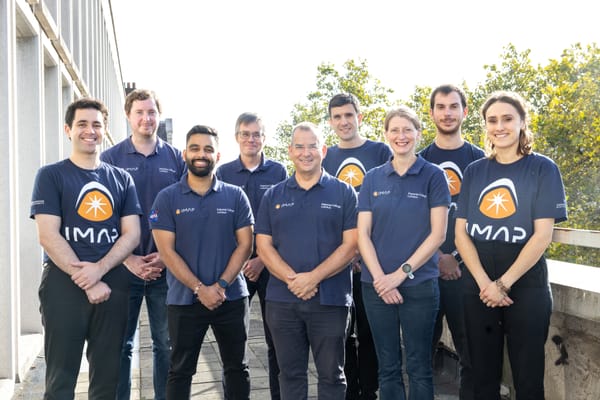
Over six months, the light aircraft was designed and manufactured by a team of around 15 students of the Aeronautics, Electrical and Electronic Engineering, and even Materials with Nuclear Engineering courses. While this test flight was battery-powered, the aircraft was designed to accommodate solar cells in the wings that, the team hopes, will allow it to stay in the air for days. Currently, ETH Zurich’s AtlantikSolar, which flew for over 81 hours, holds the endurance record for an aircraft weighing under 50 kg; the team’s end goal is to break this record.
A new design
As we took the tube to Wormwood Scrubs, team leader Suhail Halaby told me about the design of the aircraft. Compared to last year, the new aircraft was larger and boasted much longer wings. It weighed only 8 kg, constructed of balsa wood with aluminium beams. Certain components, like the housing of the fuselage and the wing root, were 3D printed. There was no landing gear – the aircraft was expected to land on its fuselage, which used mounted PLA skid pads to bear the brunt of the impact.
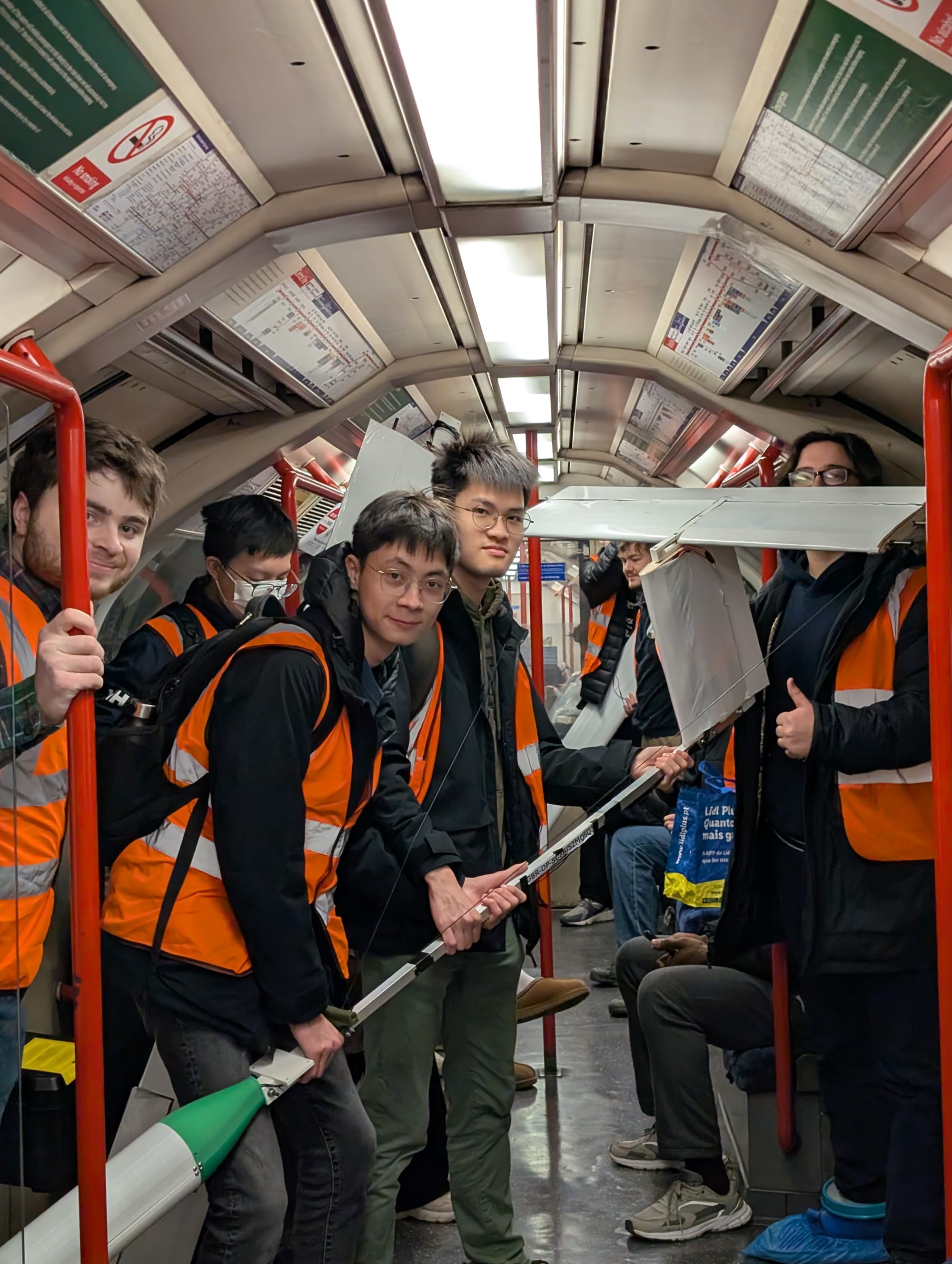
The wings were composed of aluminium and carbon fibre spars, with a balsa wood skin coated in a weather-proof plastic film. The plane carried only two lithium polymer batteries, with space to accommodate many more for future missions. The batteries were expected to last a 15 minute-long flight.
As a demonstrator aircraft, the plane was designed to save money. The same flight controller had been used for previous ICAV projects, and various upgrade packages, including a camera pack, were not installed. It was primarily a way for the team to test their design methodology and verify their simulations. For example, simulations done using the Department of Aeronautics’ SHARPy aeroelastic solver were used to predict how the aircraft would flex in flight. The team hoped to collect data such as the current draw, which would allow them to determine the number of solar cells required to supply the power needed to maintain altitude.
Arriving at Wormwood Scrubs, the team assembled the aircraft and moved it around on the ground to test the fly-by-wire system, which automatically reacts to maintain the attitude of the aircraft. All seemed well, so the team followed the launch procedure: two people carried the aircraft and ran into the wind. Upon release, the pilot pitched down to gain airspeed and then pulled up as the aircraft took flight.
The flight
The aircraft flew in a remarkably stable manner and accelerated rapidly, banking gracefully to the left. However, due to the small size of Wormwood Scrubs, the aircraft reached the park boundary seconds after takeoff and the pilot realised he was unable to pull up sufficiently. The aircraft struck the top of a tree, the wings detached and the nose was severely damaged when it hit the ground.
The team found that the airspeed was higher than expected, at roughly 25 metres per second, five higher than the anticipated maximum airspeed. It was initially theorised that the increased airspeed meant that the motor responsible for actuating the elevator provided insufficient torque to counter aerodynamic forces, resulting in reduced pitch control. After an exhaustive review of the flight data, it was determined that the fly-by-wire system potentially limited the aircraft’s pitch rate in the critical seconds leading to the impact, hampering its ability to avoid the obstacle. At the time of writing the team is still investigating the cause of the crash.
Although the flight ended abruptly, Suhail affirms that “the team is confident that we will return to the skies promptly,” having gained “significant operational insight.” The next iteration will be larger, with a wingspan of six metres and possibly an unconventional twin boom design. “A project of this scale will necessitate more suitable flying fields,” Suhail adds, “testing from a proper aerodrome will be necessary.”