People do not know what scientists do
How public skepticism thrives when scientific work is poorly understood.
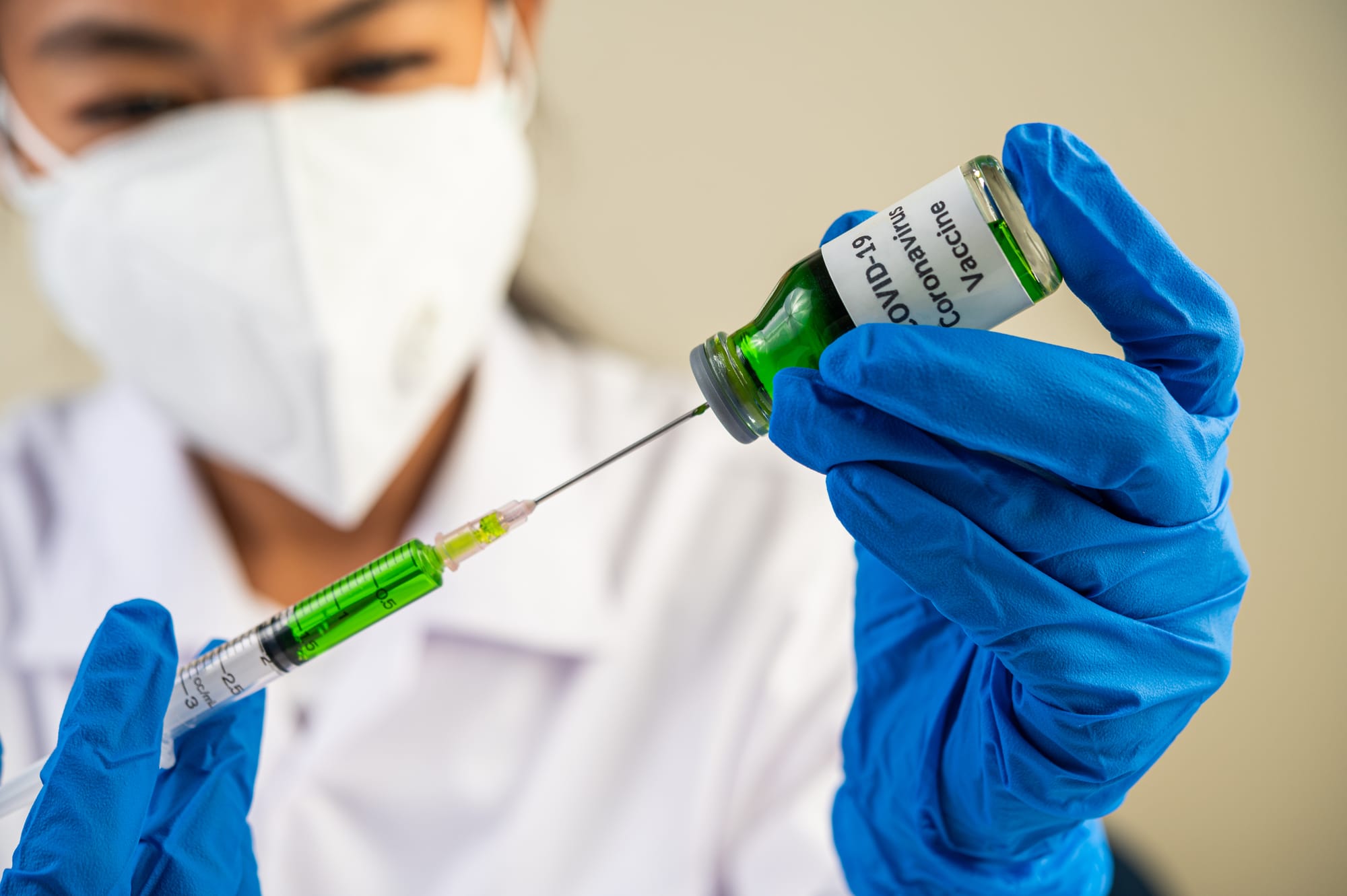
A question I am often asked by extended family members, whose names I can never remember, is “What do you want to do with a Biochemistry degree?” It is a fair question that my usual answer of “Biochemistry” doesn’t suffice. I’d bet that a law student or medic doesn’t face the same problem. Popular depictions of both professions are rife in the media; scientists, however, are not – besides socially awkward particle physicists who do not shine a fantastic light on the rest. It might seem glib, but I think the lack of scientists in the public eye is genuinely worth considering. We could do with a charismatic, affable molecular biologist in the public eye (I’m imagining Harvey Specter in a lab coat).
Beyond media, there is a general public dissatisfaction with the biomedical sciences in particular which is hard to miss. The Office for National Statistics reported in 2021 that 3% of adults in the UK refused a COVID-19 vaccine when offered it. That’s roughly 1.5 million people. More recently in 2024, YouGov estimated that 30% of UK adults believed that vaccines have harmful effects that are not disclosed to the public. For me this is more worrying, because rather than just refusing, almost 21 million people in the UK believe that they are being deceived.
Common arguments for COVID vaccine hesitancy – Anti-Vax if you like – can be heard in any Wetherspoons from Edinburgh to London: “The vaccine was developed too fast. Covid is as bad as the flu, I’ll be fine.” I believe all these criticisms arise in some way or another because people do not know what biomedical scientists do, or how the scientific process works in general. Hell, in the short amount of time I’ve spent in the lab in academia or the pharmaceutical industry – even I barely know what they do. But I do know that Jason McLellan’s lab at the University of Texas at Austin combined both immense time and prior expertise with coronaviruses to solve the first structure of the CoV-2 spike protein in just 12 days. I also know that massive amounts of funding and decades of prior research in mRNA technology allowed clinical trials to be conducted rapidly and, importantly, in parallel. With very little public perception of what’s going on in our labs, scepticism is not particularly surprising. If I were a taxpayer, I’d sure want to know what they were up to. If I even utter the word “protein,” most people think I’m talking about whey powder.
So here’s what I propose. Scientists who toil every day to answer their own questions know what scientists do. They should be the ones writing books and giving talks to the public. While I have a soft spot for Brian Cox, the primary focus of ‘science communicators’ is to gather public interest rather than informing the public. A romanticised picture of science sells books and makes good telly, but it’s not really giving us the full story. Universities have so much to gain from encouraging their researchers to engage with the public. It builds a name beyond academic circles, and science funding decisions – made by politicians, who ultimately answer to the public – would be better informed for it. Not all scientists would jump at the opportunity to take time out of their frantic schedule to do even more work, but those inclined to public speaking or outreach should be encouraged to do so. I recognise there are structural barriers to this – publish or perish and so on – but until the hobby of science writing is treated as a core competency of being a scientist, the public will continue to puzzle at the dark corner that science sits in.
The public isn’t anti-science because they’re irrational or ignorant; they’re sceptical because no one has properly explained what scientists are doing and why.