The Odyssey: all the spectacle in the world can’t save Nolan’s hero
With $250 million, IMAX cameras and a cast comprising half of Hollywood, Nolan turns Homer’s epic into an immense spectacle – but loses much of what made Odysseus compelling along the way.
Christopher Nolan had $250 million, IMAX cameras, half of Hollywood, and one of the greatest stories ever told. Somehow, The Odyssey still feels like it’s missing something.
Too many stars?
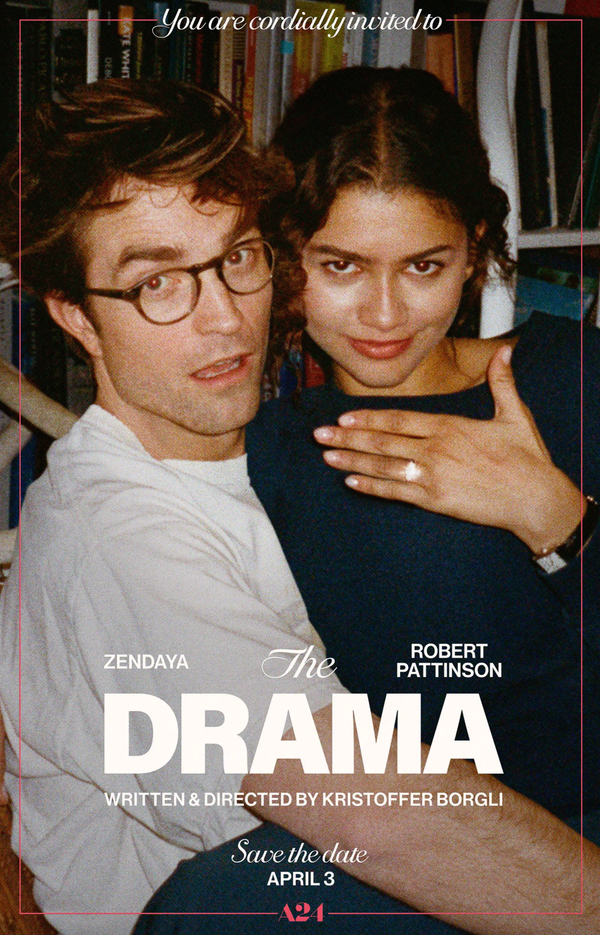
The most talked about aspect of the movie pre-release was the cast – “star- studded” would be an understatement. Almost every single central character was played by a household name – a glaring example being the internet’s favourite couple, Tom Holland and Zendaya. Nolan, of course, could not resist casting his familiar favourites in Matt Damon and Anne Hathaway. On top of this, he managed to snag big names like Travis Scott, Mia Goth, Lupita Nyong’o and countless others.
Unfortunately for Nolan, hiring the industry’s most famous actors was not enough to save his script. Holland’s Telemachus talking about his “Dad” every five minutes never failed to take you out of the movie. The original poem was written in 8th century BC, not to mention in formal Greek – I understand poetic license, but could Nolan not at least try “father”? The semi-comedic performance Holland was almost forced to deliver by the script in my opinion belonged in Grease, not a modern- day blockbuster. Most of the other performances were similarly lacklustre.
Zendaya, on the other hand, is just so... Zendaya? Starring in four projects in 2026 alone, she is definitely toeing the line of becoming oversaturated. I couldn’t even form an opinion on her performance as Athena because the whole time I was thinking “Oh, there’s Zendaya again!” – ultimately a flaw down to Nolan’s miscasting, not her performance.
The standout performance was, undoubtedly, Robert Pattinson’s Antinous. A true character actor, Pattinson was able to convincingly portray a snivelling, conniving coward – as his character deserved. Lupita Nyong’o, always reliable to bring a strong performance, was impressive playing both Helen of Troy and her twin, Clytemnestra.
Perhaps controversial, but I believe the fundamental problem with the film’s main performance, Damon’s, is Nolan – he shot himself in the foot the same way he has with all his recent projects. The common thread throughout his modern catalogue is the attempt to make a man out to be a troubled hero when he’d be more suitable as a bank manager (like, in my opinion, Oppenheimer). No matter how convincing Damon tried to be throughout the film, there was no way he could give enough to overcome this. The oldest Odysseus is meant at any point in the story is late forties and Damon is 55 years old – and if this didn’t make things hard enough for Damon, Nolan couldn’t convincingly write a hardman if you gave him 20 million dollars (which they did).
Lost in adaptation
As has been pointed out countless times, the film was not strictly accurate to the original. In abstract, I have no problem with this – they still tell the same story, with the same beginning and ending. However, some hang ups remain. What struck me most while watching was how Odysseus’ men behaved at Circe’s house. Nolan portrays Circe as just an evil witch, who turns the men into pigs out of paranoia or even spite. Odysseus acts as if the concept of his men not having perfectly pure intentions is completely unbelievable – despite their established history of sexual violence and pillage. I am not trying to justify Circe’s actions, but this theme of Odysseus and his men being misunderstood angels persists. Nolan tactlessly avoids the topic of the crew taking multiple women as captive war prizes in the original story by just ignoring it entirely. What is so fundamental about Odysseus’ character is that, although he is a hero, he is still flawed. That’s what gives him depth and that is why his story has stood the test of time – and that is where Nolan missed the mark throughout.
There are of course many other deviations from the original story. To name a few: the removal of the Phaeacians on the island of Scheria, Polyphemus not calling for help from the other cyclopes and the explicit inclusion of the “Sea People”. Inclusion of all of these – particularly Odysseus’ arrogance in his interactions with the cyclops – would, of course, have added character depth. However I don’t think the changes are necessarily a problem. I actually liked the fact he made explicit mention of the “Sea People”. Nolan did perhaps telegraph the fact Odysseus and his men were the “Sea People”, but the film leaves little room for its audience to draw their own conclusions.
All style, no subtlety
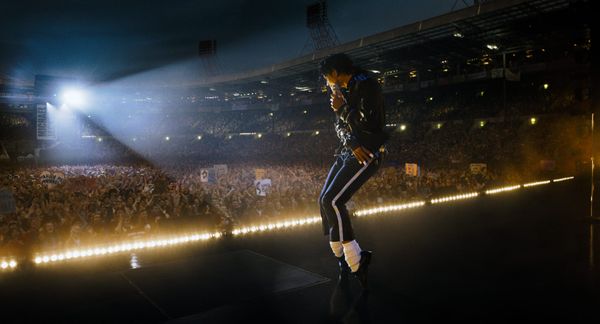
Throughout the film, there was one shot that struck me every time – the image of the ship’s bright red sails against the dark blue of the dusk sky. These few minutes alone were enough to justify filming on IMAX cameras. Every time I felt like leaving the theatre, Nolan was able to reel me back in with these visually stunning shots. Nolan shows he is able to make Odysseus’ world look mythic, but he struggles to make Odysseus himself live up to it.
If you had taken a shot every time a character mentioned the “law of Zeus” you would not have been able to leave the theatre on your feet. A theme has not been so laboured in a film since obsession in Whiplash (2014). Most of the audience was undoubtedly able to understand that the concept of guest-friendship – or xenia – was important from the first few times it was said. It almost became offensive that Nolan felt the audience needed to be reminded of it so constantly.
Enough with the heroics
Perhaps personal bias, but I could’ve gone without the multiple ten-minute fight scenes. The final fight scene, where an aged, injured Odysseus (who was unable to exercise or train the whole time he was Calypso’s island) singlehandedly fought off hundreds of attackers with what appeared to be an infinity bow was just boring. The novelty value wore off almost instantly, and it added nothing to the plot, just to the already too-long run-time. However, watching Telemachus bumble like a fool while his father unlocks superpowers downstairs was entertaining; unfortunately for Nolan (and Holland), I’m not sure it was intended to be.
In what was a bland costuming landscape, Theron’s stuck out like a sore thumb. Calypso’s outfits looked more suited for a Zara campaign than isolated life on a remote island. Her netted cape remained the worst costuming choice in the film – until Holland’s appearance in the final scenes. A viewer unfamiliar with the movie’s budget would, upon seeing Telemachus’ ridiculous crown, assume it was the independent project of a student. I nearly laughed out loud – whatever emotional momentum Nolan had managed to build for the final goodbye was immediately lost.
While The Odyssey had moments of potential, for me it was unfortunately underwhelming – disjointed, rhythmically flat, and did not land emotionally at all. Nolan takes an ancient, morally complicated hero and turns him into a conventional modern blockbuster protagonist. It’s spectacular, expensive, technically accomplished and impossible not to discuss – but somehow far less interesting than the 3,000-year- old character it adapts. It makes you wonder why Nolan’s the one getting the big bucks.