The power of action
Peter Knapp discusses the Just Stop Oil protests which took place on Cromwell Road last week
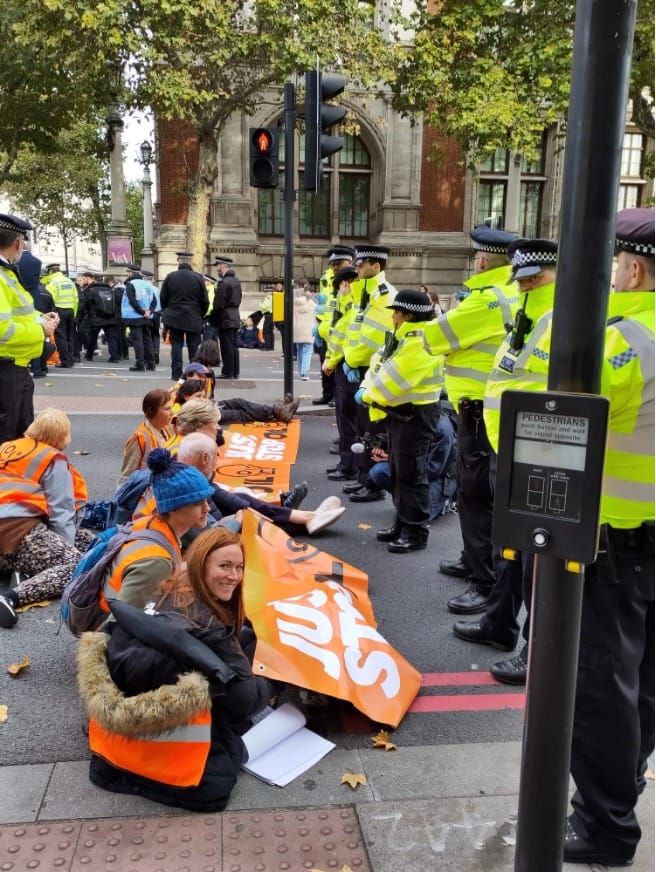
Did you see that Cromwell Road was blocked by Just Stop Oil (JSO) last week?
Did you know that they found the reaction from the public mostly positive and encouraging? Or do you believe the media headlines claiming that protesters are universally loathed and prevent ambulances from getting to hospitals? (The ambulance claims were debunked – the ambulance service told newspapers that paramedics were not slowed by JSO protests; they even have a ‘blue lights policy’ where emergency vehicles are always allowed to pass through.)
Just Stop Oil protesters blocked Cromwell Road on Wednesday 19th October. Critics claim that disruptive protests do more harm than good, but activists point to a history of effective and successful protests, including those of the suffragettes, who fought for women’s right to vote in the UK; and the US civil rights movement, both very unpopular in their times. Suffragettes slashed paintings in 1914, which led to all women being banned from the British Museum unless accompanied by a man. Their disruption forced society to change.
Disruption works.
Disruption has been effective more recently as well, putting climate on the political agenda of the UK. Just two weeks after Extinction Rebellion occupied London in their 2019 protest, the UK declared a state of climate emergency, directly meeting one of the movement’s six demands. The percentage of people who thought ‘the environment’ was the most important issue facing the country increased, showing ‘reactive’ response from flooding and ‘proactive’ response from protest.
What does JSO want?
Just Stop Oil wants the UK government to stop new fossil fuel exploration immediately, which agrees with the International Energy Agency’s demand that “There can be no more new investments in fossil fuel supply beyond that already committed as of 2021”. This means putting a stop to the 100 new licences the government wants to award in hope of extracting more oil and gas. To achieve this, Just Stop Oil undertakes non-violent civil disobedience, which means they cause as much disruption as necessary to make it impossible to ignore their message: that new fossil fuel extraction will create a nightmarish future for all.
Roadblocks might be disruptive, but they are nothing compared with the disruption that is caused by the disasters made more likely and severe by burning fossil fuels. What is more disruptive: a roadblock for a few hours or a bridge collapsing from flash flooding? Or a war between nuclear nations when glaciers melt, leaving crops without water?
Climate protest is about being proactive — acting before disasters happen. The minds of many, including the government, are reactive — they act after disasters happen. We need action now to stop the worst from happening later. The alternative is to wait until more floods, famines, droughts, and conflicts are upon us before finally acting, ignoring the problems until after millions are affected, predominantly the people who have contributed least to climate change and are least likely to have the resources to be able to adapt.