Trump’s foreign policy is deeply American
The roots of American interventionism trace back to the early 19th century.
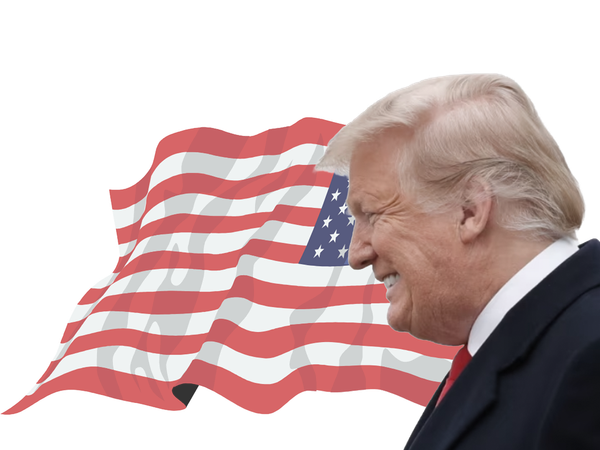
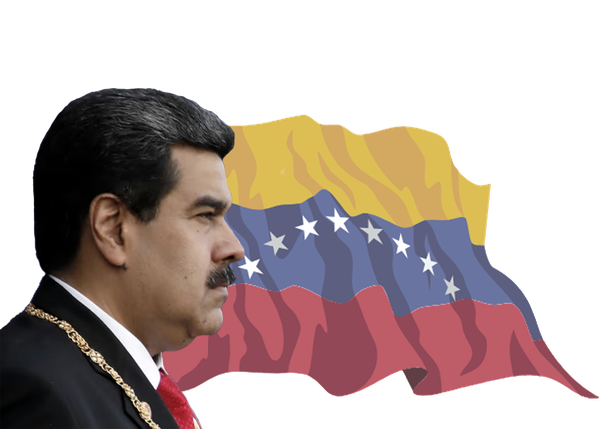
American president Donald Trump’s foreign policy has been making headlines again. His use of United States Armed Forces to depose Venezuelan president Nicolás Maduro was at once a relief for Venezuelans long subjected to an anti-democratic dictatorship, and an overreaching use of military force without congressional approval (for more on these nuances, see Issue 1887 of Felix). Coupled with his repeated threats against the sovereignty of Greenland, it is becoming difficult to see American foreign policy as anything but aggressive. But that does not mean these initiatives are new. They date at least to 1823, with the establishment of the Monroe Doctrine.
The Monroe Doctrine, largely considered the first uniquely American declaration of international relations, was written by Secretary of State John Quincy Adams (under President James Monroe). The document was a response to the founding of new Latin American republics independent from the Spanish Empire. In essence, it expressed American interest in keeping European monarchical powers out of the Americas. To quote it directly, “any attempt on their part to extend their system to any portion of this hemisphere” is inherently “dangerous to [the United States’] peace and safety.”
At the time of the Monroe Doctrine’s writing, the United States lacked sufficient military power to pose a threat to the European monarchies. Thus, for decades, it was largely ignored. For example, France invaded and overtook Mexico in the 1860s. However, after the end of the US Civil War in 1865, President Andrew Johnson authorised volunteer troops and arms to be sent to the Texas-Mexico border, the first tangible invocation of the Monroe Doctrine.
The Doctrine underwent an important evolution at the beginning of the 20th century, under President Theodore Roosevelt. Roosevelt extended the Monroe Doctrine in 1904 to allow the United States to use military force to ensure Latin American countries paid international debts. Named the Roosevelt Corollary, this addendum was introduced after newly-elected Venezuelan President Cipriano Castro refused to pay the country’s debts to several European nations. In practice, the Corollary was used as justification for the seizure of Latin American resources during the early 20th century, and then for anti-communist military action during the Cold War. While the original Monroe Doctrine was typically favourably viewed by the Latin American countries it impacted, as it protected their independence from colonial powers, the Roosevelt Corollary was often seen as encroaching on their sovereignty.
The echoes of the Monroe Doctrine are clearly visible in President Trump’s international relations. Just this past week, at Davos, Trump called Greenland an “enormous unsecured island” that “is actually part of North America… [and] is therefore a core national security interest of the United States of America.” In a press conference on January 3rd, one of his justifications for the removal of Maduro was that “Venezuela was increasingly hosting foreign adversaries in our region and acquiring menacing offensive weapons that could threaten US interests and lives.” He went on to reference the Monroe Doctrine directly: “Monroe Doctrine is a, a big deal, but we’ve superseded it by a lot… They now call it the ‘Donroe’ Document.” The implication, beyond Trump’s trademark self-obsession, is that the Monroe Doctrine may undergo its first major reinterpretation in over a century.
Make no mistake: just because the Monroe Doctrine has a long history does not make it best practice. The Doctrine became anachronistic after the conclusion of the Cold War. The rise of neoliberalism, and thus liberal institutionalism, shifted global international relations to a model of sustainable cooperation, centralised in institutions like the G7, the EU and the WTO. Secretary of State John Kerry (of the Obama administration) declared in 2013 that the “era of the Monroe Doctrine is over.” The modern form of diplomacy calls for “adhering not to doctrine, but to the decisions that we make as partners,” or, for diplomacy, not policing.
The goal of this contextualisation is not to excuse Donald Trump’s aggressive policies, but rather to argue that they should not be surprising. After all, he’s always told the world he wants to “make America great again”. That directly calls for American hegemony, interventionism, and expansionism – along with all its military aggression.