Addicted to Drukqs
Drukqs at 25: How Aphex Twin combined the brash with the beautiful
Aphex Twin, real name Richard D. James, is a musical chameleon. All his albums tend to shift in sound from one to the other: there’s the soft, danceable Selected Ambient Works 85-92, which became a key release for the ambient techno and IDM genres. He followed it up immediately with Selected Ambient Works Vol. 2, a three-hour long epic with sprawling, contemplative pieces inspired by his lucid dreams, which completely revolutionised ambient music. Only a few years later, however, he abandoned ambience completely with the Richard D. James Album, a chaotic release inspired by drum and bass, with cut-up drum breaks rattling alongside warm, reflective melodies.
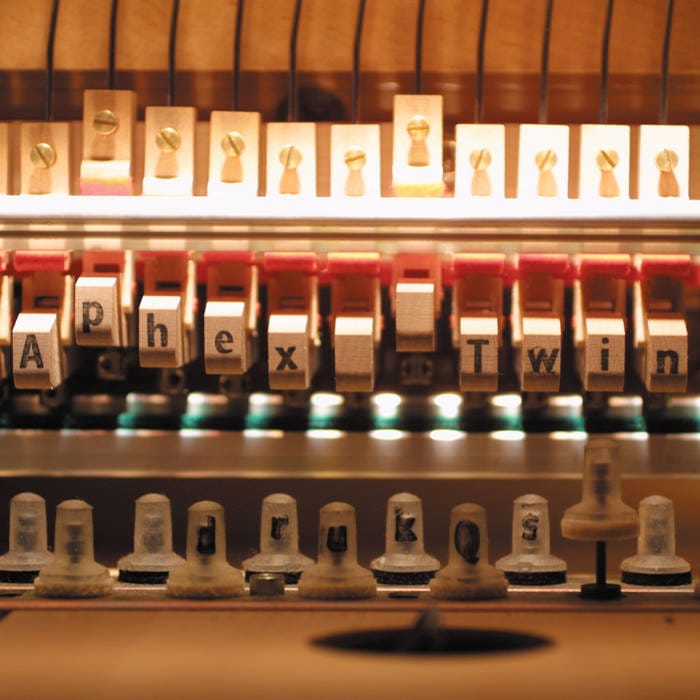
And then he released Drukqs, exactly 25 years ago to the day, which might be his most eclectic. From the start, you have no idea what to truly expect – he takes his experimental ethos to the absolute limit. Not only was he influenced by experimental electronic artists like Squarepusher and Bogdan Raczynski, he was also inspired by classical composers. Think Debussy (“Clair de Lune”) and Satie (Gymnopédies), whose piano pieces fit right in with the feeling of staring up at a starlit sky.
Even Drukqs’s release is shrouded in mystery. Aphex Twin himself claims he released it after accidentally leaving an MP3 player on a plane. Suspecting someone would take hold of it and leak, in his own words, the “282 unreleased tracks” contained within it, he decided to beat the leaks and release Drukqs. That certainly sounds possible – the album has 30 songs and spans 100 minutes. Yet, he is also known for joking about in interviews: he once claimed to live inside the Faraday Memorial in Elephant and Castle. I’d therefore take that story with a pinch of salt, not least as the album is almost too perfect for it to be true.
Machine Music: breakbeats and piano
Drukqs is, in many ways, a mix of all the sounds Aphex Twin had played around with on his previous releases. You’ve got the tranquil atmosphere from his two Selected Ambient Works releases, meshed with the zany drum and bass from the Richard D. James Album. However, Aphex Twin arguably takes all these ideas to the extreme on Drukqs. It is a double album, after all, but one which shifts between genres from track to track. First, Aphex Twin will offer up a calming, almost ambient piece before sending you into rave-fuelled sensory overload, or vice versa.
The album opens with “Jynweythek”, a quirky prepared piano piece which clips and chirps delightfully. It sounds like an old musical box, carefully unwinding as it plays its pretty melody. And then you have “Vordhosbn”, an insane track with intricate drums and explosive synths. It’s almost aggressive and intimidating, yet still incredibly emotional, with a melodic synth line at its heart. Somehow, this sonic shift sounds completely natural after a few listens, with both tracks sounding like they could only come from Aphex Twin: eccentric, yet charming.
It’s a track run which could give you whiplash, and Aphex Twin doesn’t care if you’re sitting there bemused.
Probably the best example of this pattern can be found in a three-track run about a third of the way through. First, Aphex Twin treats you to “Cock/Ver10” with its piercing synths, crushing drums, and a scream of “Come on you cunt, let’s have some Aphex acid!”. It’s very reminiscent of artists like Squarepusher, whose entire ethos was centred around sampling drumbeats and mixing them with manipulated vocals. In “Cock/ Ver10”, that means you get to enjoy the drums from “Things Got to Get Better (Get Together)” by funk singer Marva Whitney, except they’re scrambled to the point of unrecognisability. We then have “Avril 14th”, a stunning piano piece that sounds like a missing Gymnopédies composition from Satie. Curiously, though, Aphex Twin isn’t actually playing the piece: the track consists of a MIDI composition, played back using a Disklavier. In other words, it’s not as acoustic as it might initially sound. You’re then thrust into “Mt Saint Michel + Saint Michael’s Mount”, probably my favourite Drukqs track. Made up of several dazzling breakbeats amidst a stunning synth melody, the ending is especially beautiful as you’re treated to haunting female vocals which start cutting up in time with the drums. It’s a track run which could give you whiplash, and Aphex Twin doesn’t care if you’re sitting there bemused.
Sometimes, the songs will straight up unsettle you. Right after the euphoric highs of “Mt Saint Michel”, you have “Gwarek2”: it’s nearly seven minutes long and made up of several eerie samples, such as people screaming and a chain being dragged across a fence. “Gwarek2” is probably the only real hiccup on this album, mainly because it slows the album down and doesn’t amount to anything remotely interesting. The only positive aspect I can think of is that it proves Aphex Twin went all out for this record, creating whatever he wanted.
Another lovely hat-trick of songs can be found right at the very end. Kicking us off is “Ziggomatic 17”, the final drum and bass track on the album. Across its eight minute runtime, it transforms from a claustrophobic smattering of no fewer than four drum breaks into a heady, rave-like piece. The synths glisten and take centre stage yet never slow down until the very end. It’s followed by “Beskhu3epmn”, another prepared piano composition which echoes like the backdrop to a horror movie. The album concludes, however, with the minimalist “Nanou2”, named for his then girlfriend. It’s the most restrained song on the album, and very Debussy-esque. It’s made up of various piano chords, held together by silence. The final product is melancholic, yet hopeful, arguably anti-climactic considering how prevalent noise is on Drukqs.
Cornish Acid: how Drukqs reflects Aphex Twin’s upbringing
If you’re looking at those song titles and wondering if a cat just ran across my keyboard, don’t worry: many of the titles have Celtic origins, primarily Cornish. Aphex Twin is from Cornwall, and decided to pay homage to his homeland on numerous occasions. “Hy a Scullyas Lyf Adhagrow”, a beautiful piano interlude, translates to “She spilled my pint” and is actually a cover of an old Cornish folk song. The blaring “54 Cymru Beats”, on the other hand, references his Welsh links. It’s a drum and bass-inspired tune with squeaky text-to-speech voices, though they mostly speak in abstract lyrics.
This all makes Aphex Twin’s claim that the release was born from an accident even more suspect. It’s so obvious that this album is a deeply personal document. He’s just unwilling to admit it. One of the tracks is literally a message from his parents on an answering machine. It’s called “Lornaderek”, after his mum and dad, and consists of them singing happy birthday to him. It’s then followed up by “QKThr”, a gorgeous interlude played on a harmonium, with the mere juxtaposition able to bring you to tears.
In fact, Aphex Twin samples his parents on multiple occasions. “Taking Control” is filled with breakbeats and a synthesised voice incessantly repeating “I’m taking control of the drum machine”, but you’ll also hear his mum calling his and his siblings’ names. You’ll even hear him asking his mum for a blackcurrant drink at one point. The song is preceded by the incredibly dissonant “Father”, named as so because his dad loved it.
Drukqs’s influence over the years
It took me a lot of time to get into Drukqs. The songs are intentionally abrasive, and an unsuspecting listener might assume the piano pieces are a distraction from the electronic tracks Aphex Twin specialised in. Even when it was released, many critics were confused by how vast and overwhelming it sounded. They called it indulgent, not realising that was arguably the point. Aphex Twin set out to make an album significant to him, no matter what other people thought.
They called it indulgent, not realising that was arguably the point.
Nowadays, though, Drukqs has deservedly gotten its flowers. Kanye West sampled “Avril 14th” on his song “Blame Game”, a decision that’s undoubtedly given Aphex Twin plenty of recognition. The same piece was also featured in the 2006 film Marie Antoinette, which I similarly admire. And, of course, “QKThr” is by far the most popular meme sound on TikTok. But I digress.
Happy 25th birthday, Drukqs. In my opinion, the seminal Aphex Twin album, and maybe the most incredible electronic album to ever be released. Without it, my studying would be unbearable.