DS26: Cannabis
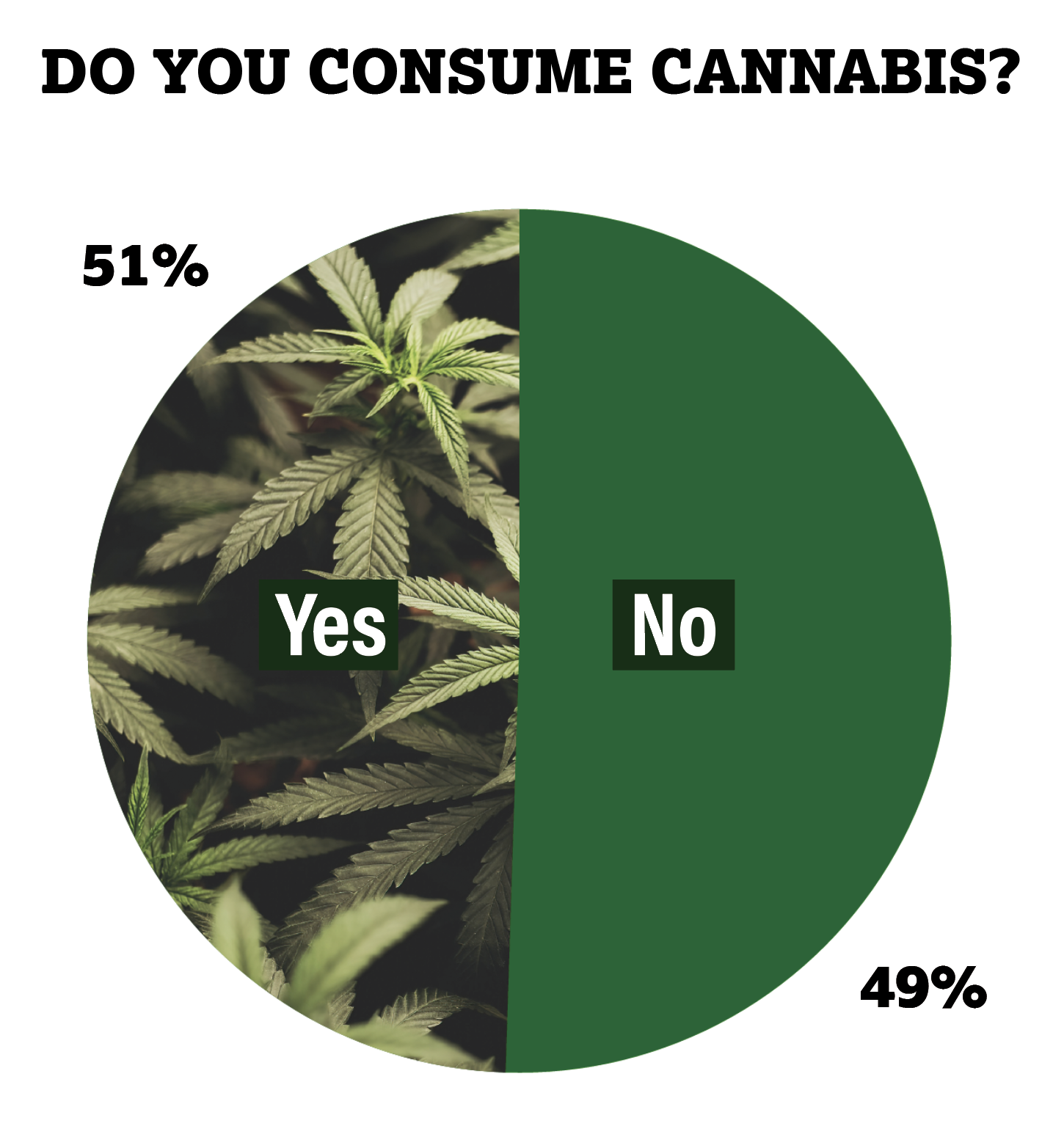
Of the 322 respondents that answered the questions in this section, a razor-thin majority had consumed cannabis in some form. This is very different to what national statistics find – in one recent study, 12.5% of youths aged 16-24 reported to have consumed the drug. This might be due to self-selecting drug users answering our survey, and the share of cannabis users within the wider student body is possibly closer to the national average.
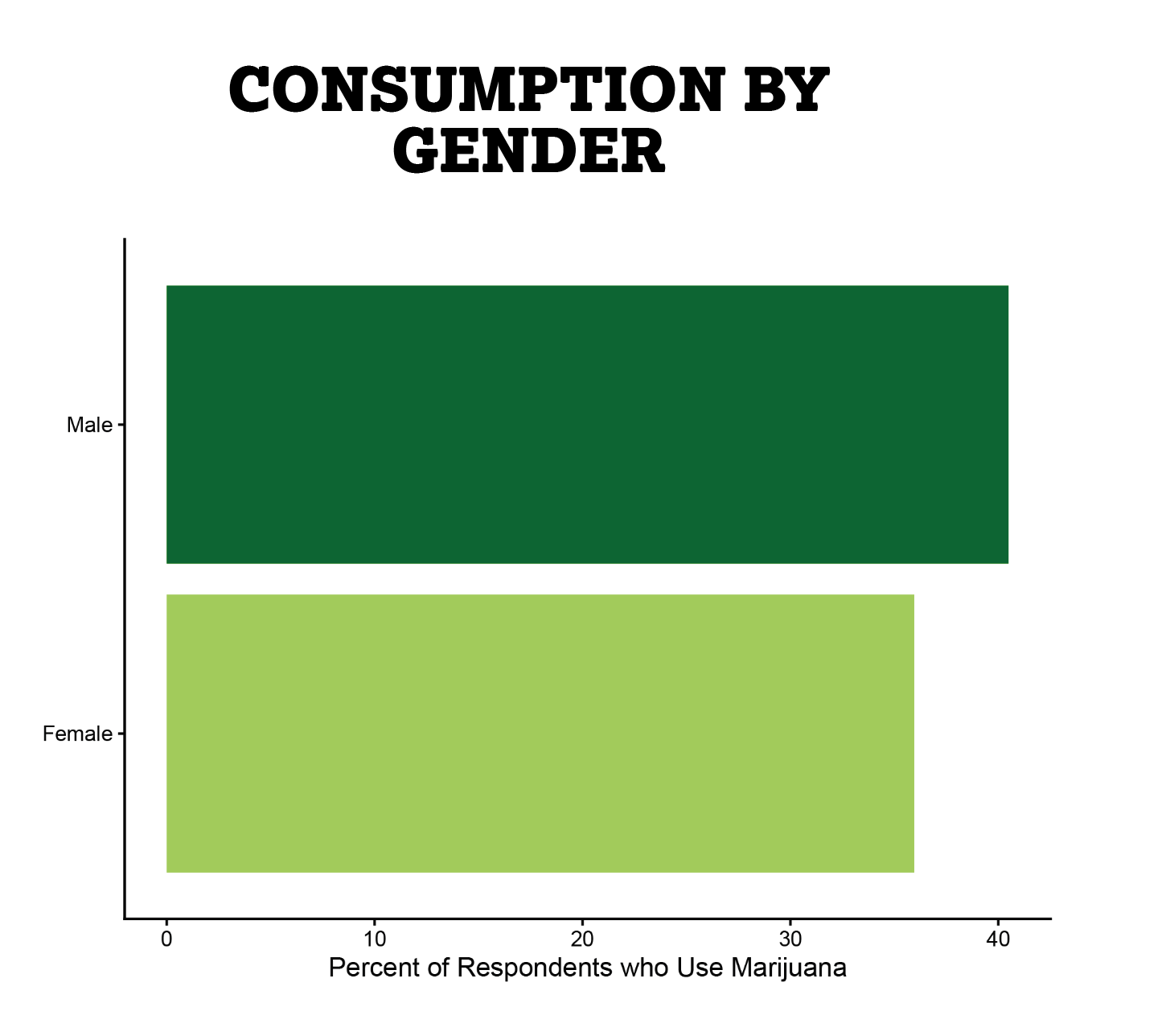
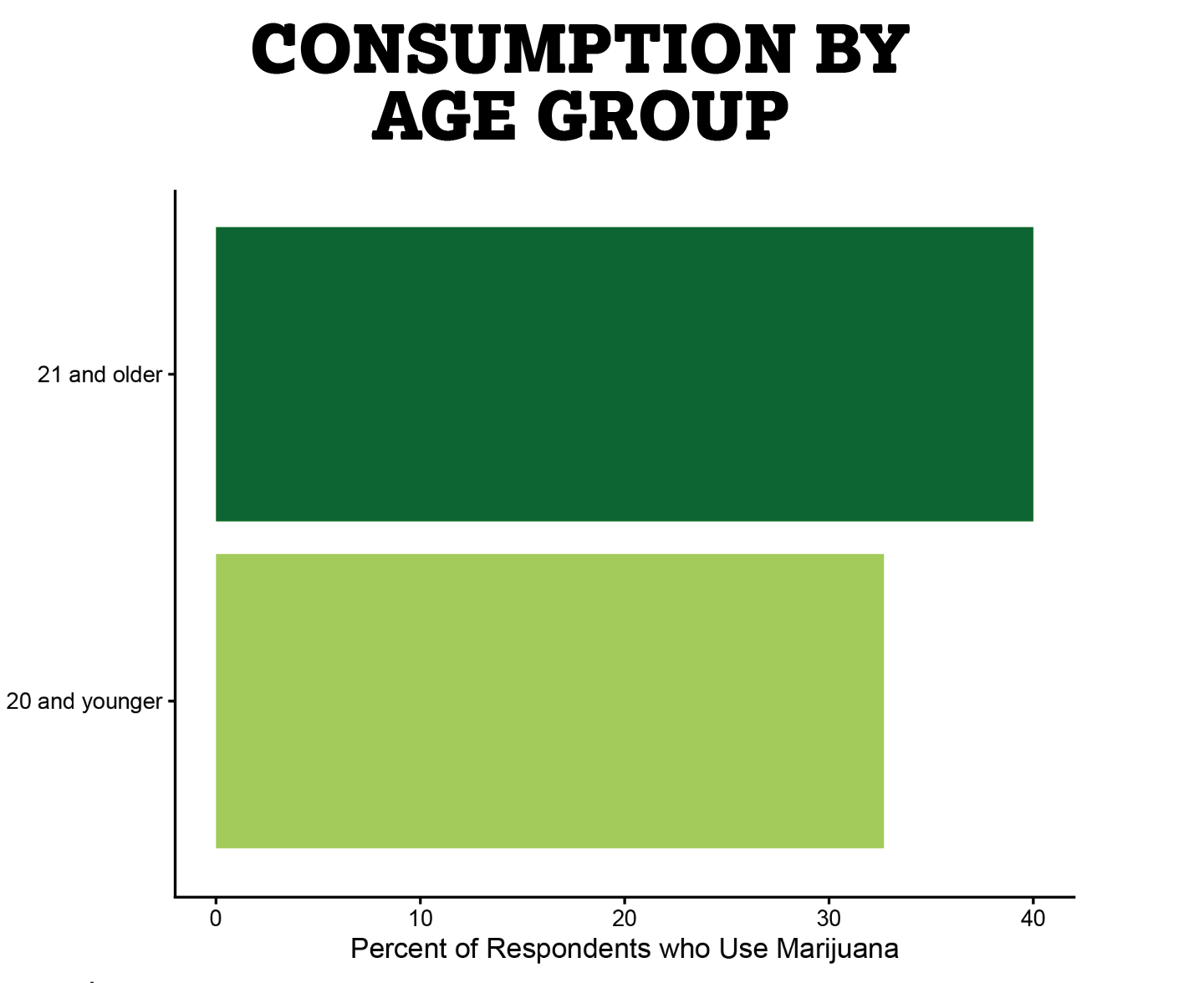
A slightly higher share of men use cannabis compared to women (data from non-binary respondents was excluded because the sample was too small to be significant), and consumption is more widespread in respondents over the age of 20.
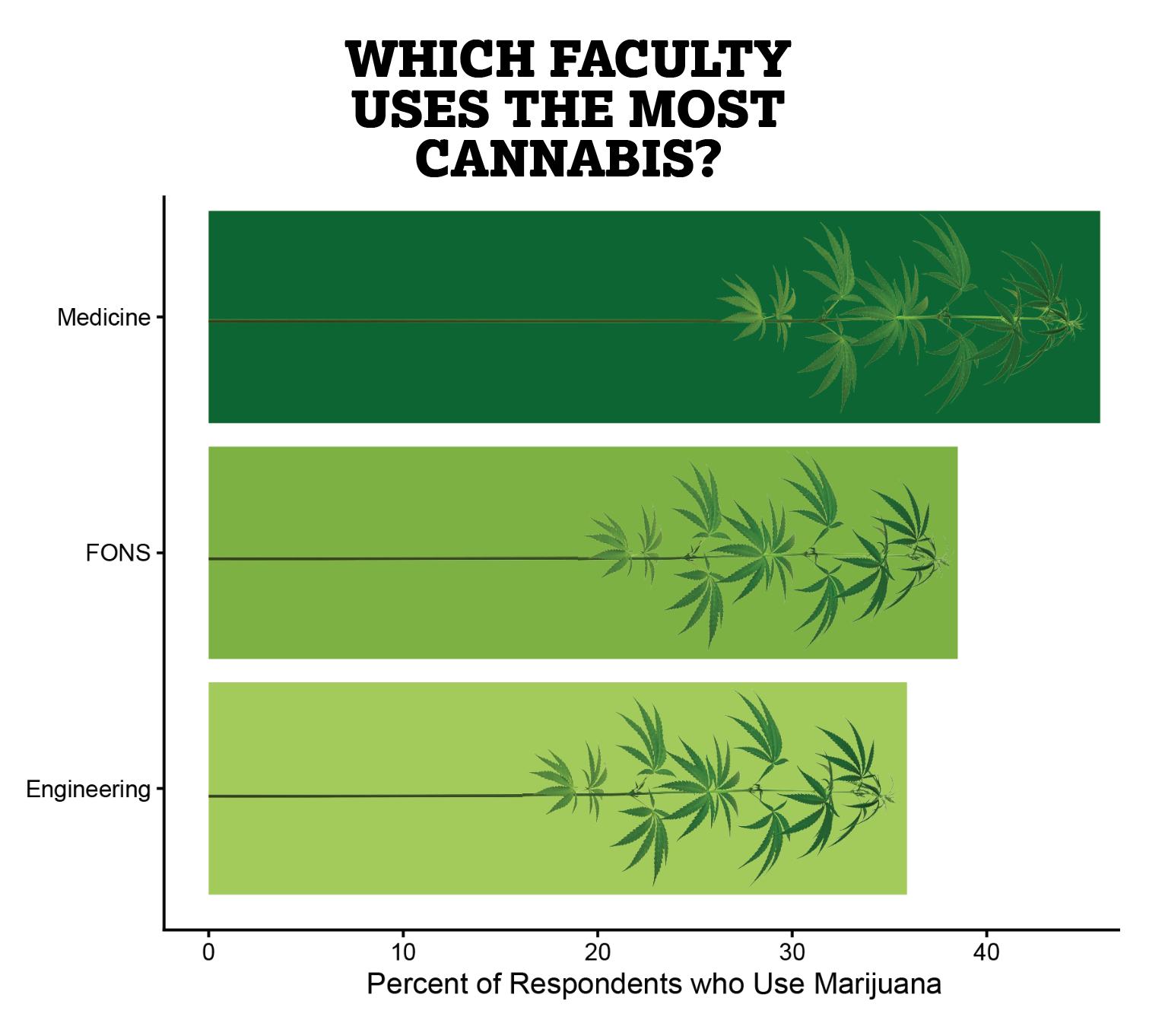
Students from the Faculty of Medicine were found to use the most cannabis (48 respondents), followed by those from the Faculty of Natural Sciences (161 respondents), while relative usage is lowest within the Faculty of Engineering (156 respondents). The Business School was excluded because of a lack of responses.
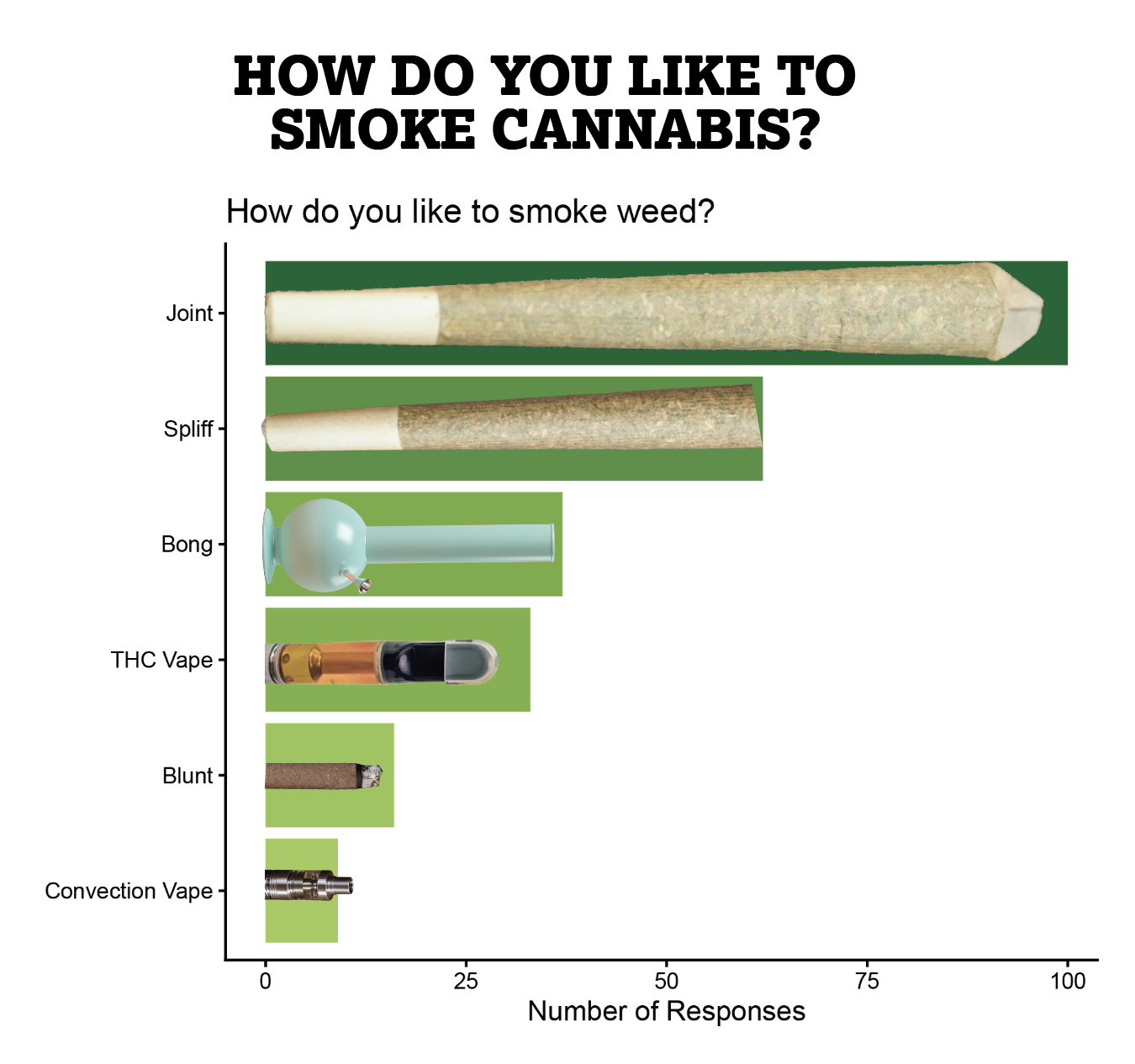
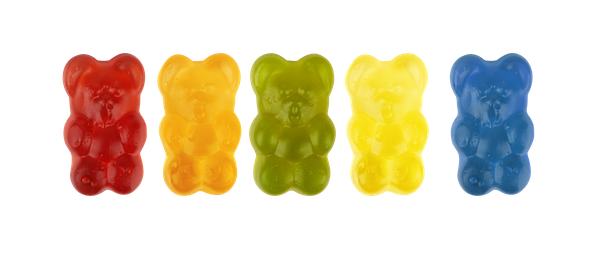
Ways of smoking weed were ranked by 125 repondents. Joints (pure cannabis in cigarette paper) came out on top, followed by spliffs (which unlike joints contain a mix of tobacco and cannabis). As for edible cannabis, brownies (74 answers) and gummies (52 answers) were the most popular foods.