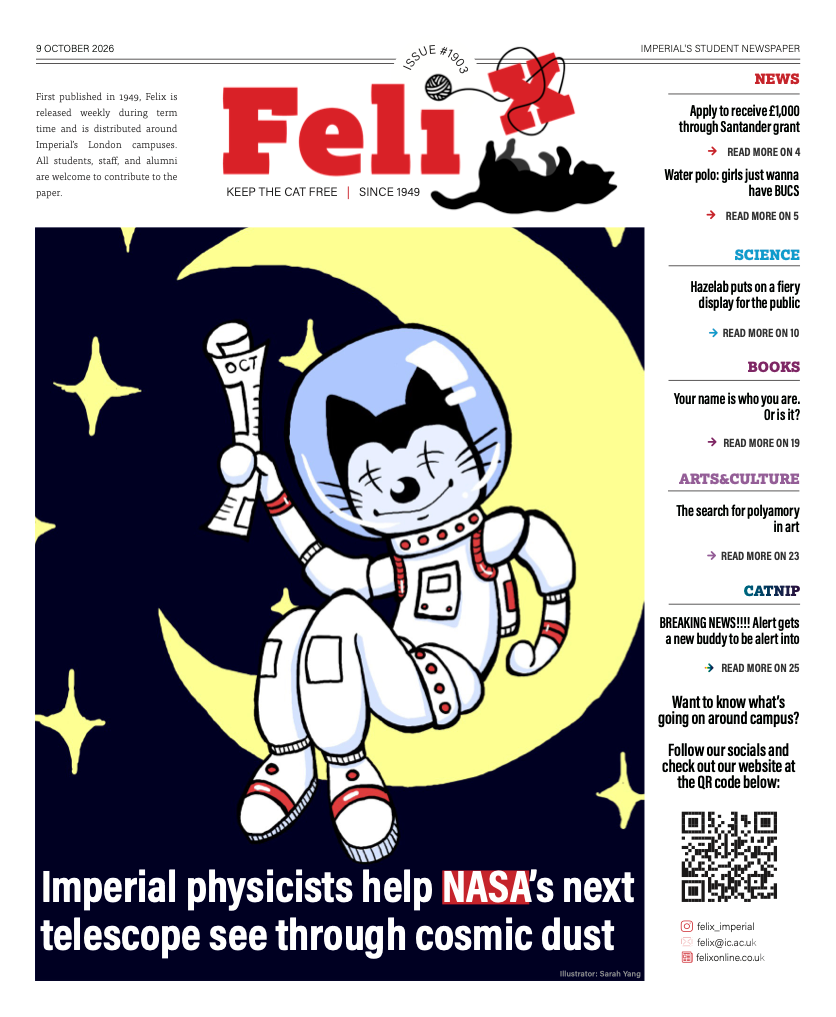
Imperial physicists help NASA’s next telescope see through cosmic dust

Imperial astrophysicists are part of the international team behind PRIMA, a far-infrared space telescope that NASA has selected as the first mission in its new Probe Explorers class.
NASA announced on 23 September that the Probe Far-Infrared Mission for Astrophysics (PRIMA) will move into Phase B for development of the preliminary design and technology.
The mission is valued at around $1.2 billion.
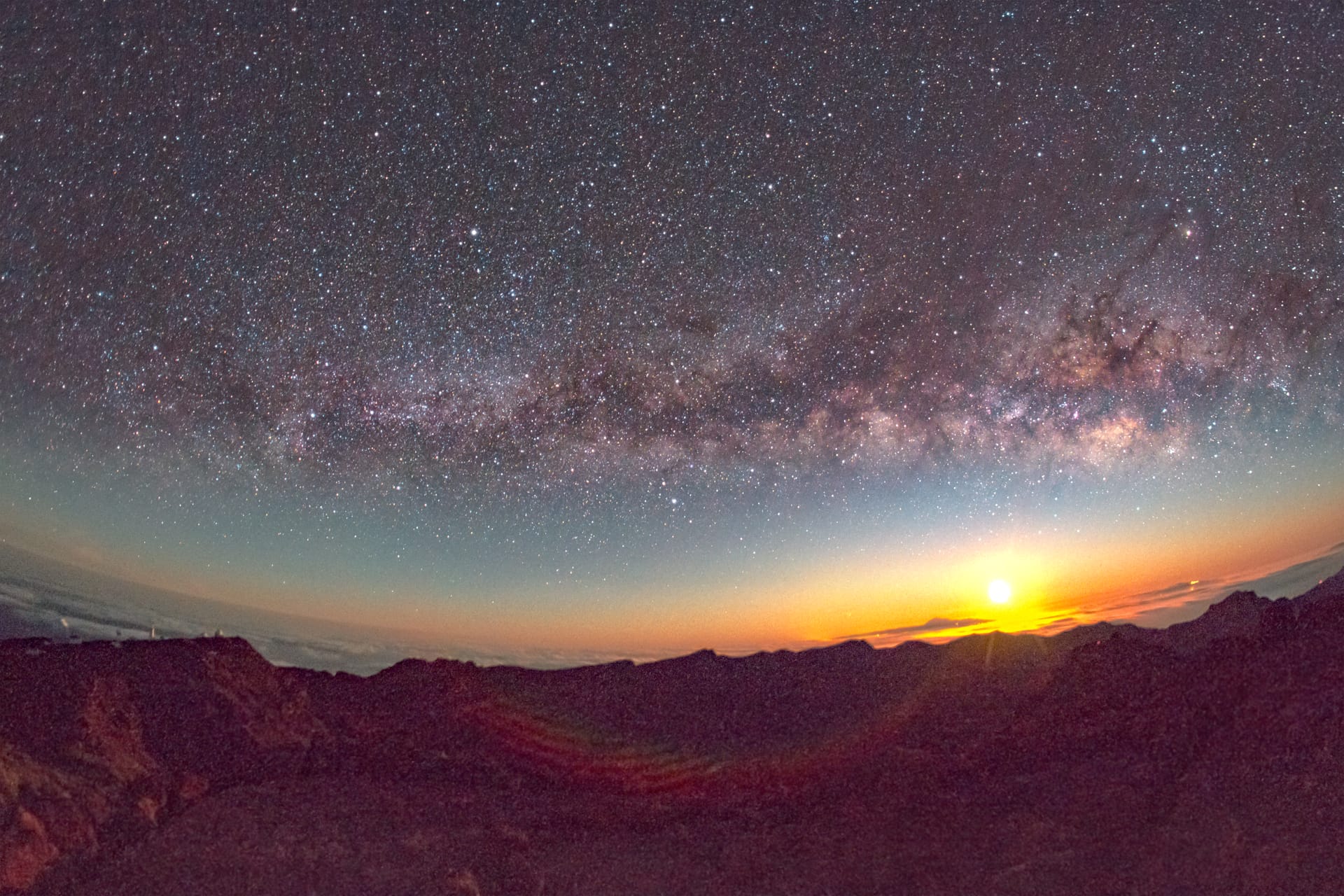
Its 1.8-metre telescope will survey regions of the Universe that conventional observatories cannot see: cosmic dust have a similar physical size to the wavelength of visible light, which gets absorbed by the particles and prevents visibility of star clusters, planets, and other cosmic structures.
“About half of the energy generation – so half of the action – in the universe is hidden by dust,” explains Dr Dave Clements, Associate Professor of Astrophysics in the Department of Physics.
About half of the energy generation – so half of the action – in the universe is hidden by dust
Far-Infrared (IR) telescopes, however, can see that dust, and see through whatever is hidden beyond it.
As the first infrared mission in over a decade, PRIMA is expected to help reveal how planets form beyond our Solar System, how galaxies and their supermassive black holes evolved together, and where dust and heavy elements in the first galaxies came from.
Imperial’s contribution is software, providing the data reduction and analysis tools that will turn PRIMA’s large data volumes into usable science.
The UK team, supported by the UK Space Agency, also includes the University of Sussex, Cardiff University, STFC’s RAL Space and Celtic Terahertz Technologies.
Dr Clements said PRIMA would fill a “vital gap” in coverage of the electromagnetic spectrum between the James Webb Space Telescope and the Atacama Large Millimetre/Submillimetre Array (ALMA). It will be the first far-infrared observatory of its kind since Herschel launched in 2009.
The mission is expected to launch in the early 2030s for a planned five-year mission.