London Demo Day 2026
Imperial hosts the capital’s top university-led, early stage startups seeking investment

London Demo Day 2026 saw 20 of the top startup ventures founded by Imperial, UCL, King’s College London, LSE, and Queen Mary University of London come together to pitch and seek early-stage investment. This year marked the event’s seventh edition, hosted by Imperial on 9 September.
The event consisted of three-minute pitches from each startup, with ventures seeking investments ranging between £100,000 and £2 million. More than half of the ventures presented were AI-powered platforms, with applications ranging from hotel customer service and organisation to elite athlete development tools.
The programme also featured remarks from Dr Manjari Chandran-Ramesh, Partner in the Early Stage Fund at Amadeus Capital Partners, and Professor Hugh Brady, President of Imperial College London.
Professor Brady highlighted the relevance of university-founded innovative companies for economic growth, and the important role of Imperial-founded innovation ecosystem WestTech London in the wider entrepreneurial landscape, with the College’s initiative generating an annual turnover of £9 billion.
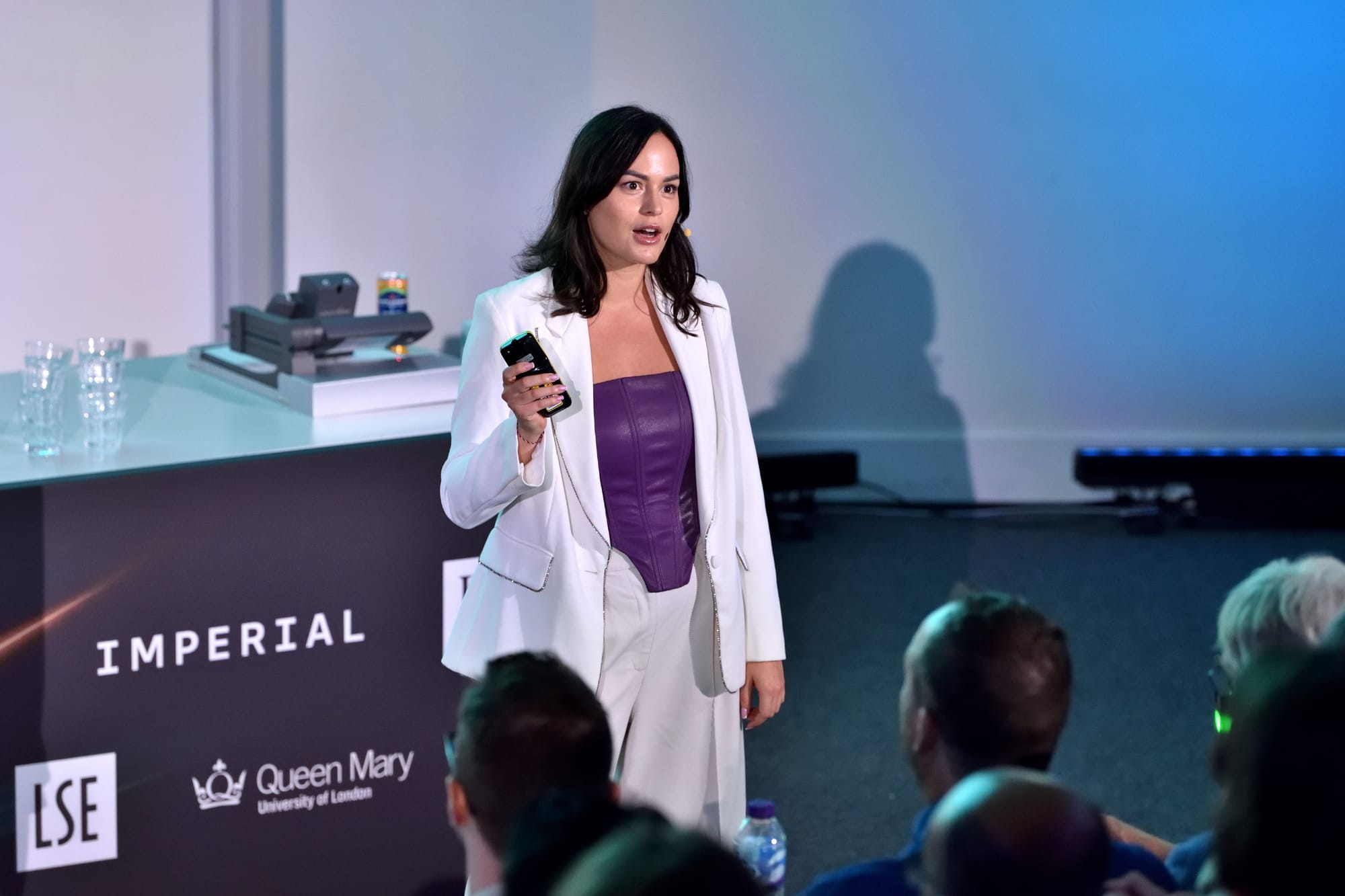
Imperial startups presented followed an overall theme of tackling problems in health and nature. Aeropod has designed an automated aeration capsule that improves soil quality without intensive machinery, while Sealeo is developing seaweed-based packaging for temperature-sensitive medicines like vaccines. SurgeryAI, with full regulatory approval, is an AI-based platform that streamlines hospital scheduling, and Change-Bio is creating a protein prototyping platform for engineered proteins to be manufactured at scale.
Highlights from other London universities include UCL’s VirWave’s testing platform AIKEI, a service that evaluates child-facing AI safety features and LSE's Arti, a proposal for personalised, engaging AI-tutored compliance courses; Kings College’s Mylenium has created an AI platform to track neurological symptoms between appointments.