Romance and politics: an unlikely pairing?
Two examples of politics and romance going hand in hand.

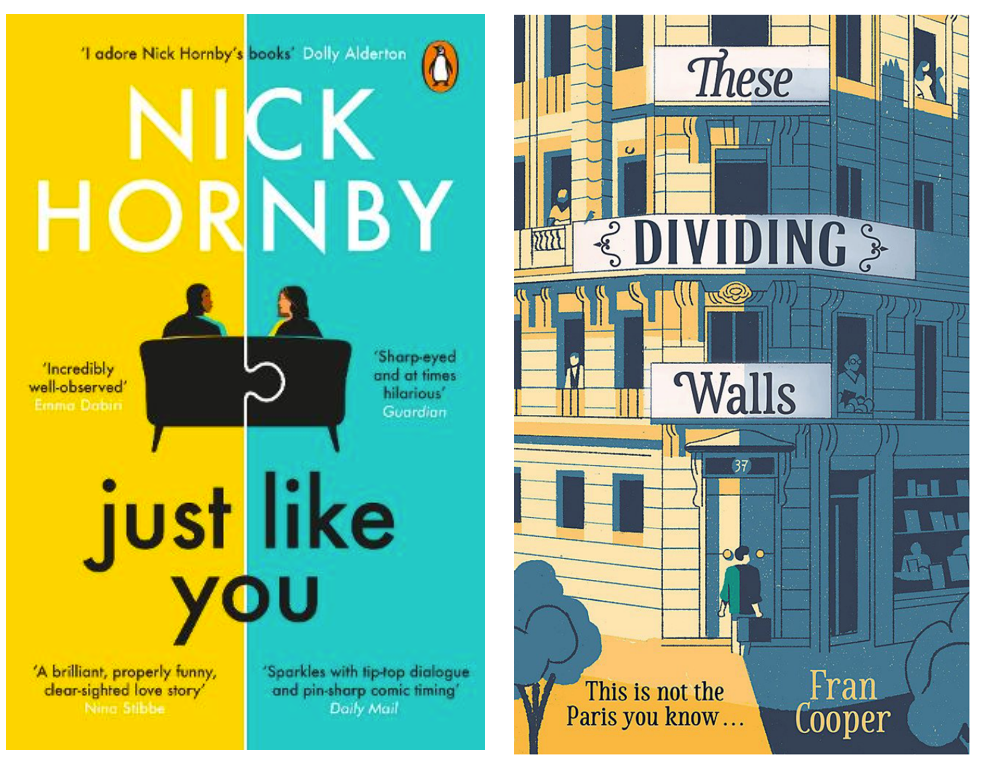
Political-romance novels don’t exactly have a genre of their own, but it seems to me the two themes have more in common than meets the eye. Nick Hornby’s newest title Just Like You, and Fran Cooper’s debut novel These Dividing Walls, both zoom in on romance in the context of political upheaval.
Just Like You is the story of a regular meet-cute which blossoms into a full-blown romance. Joseph is a young, black man who works in a north London butcher’s shop frequented by Lucy, a middle-aged, divorced, white mother of two. The pair strike up an unexpected friendship through Joseph’s babysitting of Lucy’s boys, but their obvious differences on the surface make their relationship rocky. Place them in the political landscape of 2016’s Brexit referendum and another layer of tension is added to the situation.
In this novel, Lucy is strongly against Brexit, whilst Joseph takes an agnostic stance, choosing to avoid antagonising his pro-Brexit parents, and feeling he doesn’t know enough about politics to comment. This reflects the views of many younger people, especially now that information is so often misleading and easily misconstrued. But Joseph’s uncertainty rubs off on Lucy, who steps back and analyses her own opinions, and it is this dynamic where one person challenges the other’s judgement that makes their relationship — and relationships in general — so compelling and meaningful.
These Dividing Walls follows the lives of the residents of a Parisian apartment complex — Number 37 — during a sweltering French summer. Among these residents is visitor Edward, who is staying in his friend Emilie’s attic flat, and dealing with the recent death of his sister. Edward takes a job in Emilie’s aunt Frederique’s bookshop, who also resides in No. 37 and has also previously suffered a loss. The two find comfort in each other’s company, whiling time away with sightseeing and thoughts spoken aloud, and their shared feelings lead to something more potent; an intimate companionship. This happens against a backdrop of civil unrest; with some local Parisians acting on their heated opinions about immigrants making the city their home. This also divides the residents of No. 37, especially fuelled by the arrival of a Muslim family.
Imperial’s Associate Provost, with the Equality, Diversity and Inclusion Centre, is hosting alumnus Kenan Malik to speak about his newest book Not So Black and White. In it, Malik presents a new look at the story of race, challenging ideas about identity politics and questioning conventional interpretations of these matters. Malik is a columnist for the Observer and has presented for BBC Radio stations; the event promises to be an engaging one. See below for details, and to sign up, click here!Date: Tuesday 28th FebruaryTime: 12:15–13:15Location: G16 Lecture Theatre, Sir Alexander Fleming (SAF) Building, South Kensington Campus (or live online).Cost: Free!
Contrary to the characters in Just Like You, Edward and Frederique largely remain separated from the politics in their building, but the contrast between their shared internal struggles and the fraught tension of their surroundings makes their own affair, and the countries, all the more poignant.
Funnily enough, both novels explore a relationship between a young man and an older woman, albeit in very different ways. This may explain why political discussion comes into play, as generational gaps can emphasise differences in political opinion. This could appear in the form of how much a character actually cares about politics, pressure or influences from family and friends, and as similarities or differences in point of view.
Politics can act as a much-needed grounding force in otherwise whimsical romance novels and make the reader feel more involved. Reading Just Like You while living in post-Brexit London, and These Dividing Walls while on holiday in Paris, I felt this particularly keenly. It’s something that more authors should attempt to incorporate into their writing, especially in a time when toned-down political discussion is scarce.