What Did You Read This Summer?
There are few better ways to understand someone’s character better than their choice of book.
Guillaume Felix, Editor-in-Chief
Leadership, Henry Kissinger
Have you even opened Felix to some bad news and thought, “I would certainly do a better job than the people in charge”? If not, I suggest you read more Felix. But if these thoughts occur to you as often as they do to me, Henry Kissinger has wisdom for both of us: being a leader is hard.
The cocktail of determination, courage, humility, and luck a good leader consistently sips is so elusive that old Henry found only six people worthy of being featured in his 500-page-long book. (The fact that these six leaders were close friends of his might have helped, as hinted by the conspicuous placement of a eulogy to his former employer, the controversial Richard Nixon, along those of actually memorable individuals Winston Churchill and Lee Kuan Yew.)
Kissinger’s verbosity has often been decried, but I must admit his style reads very well. Indeed, alongside his responsibility for questionable bombing campaigns, the legendary diplomat is remembered for witty adages, famously likening aircraft carriers to “100,000 tons of diplomacy”. Leadership carries a similar weight, literally and metaphorically.
Mohammad Majlisi, Felix Chair & Editor-at-large
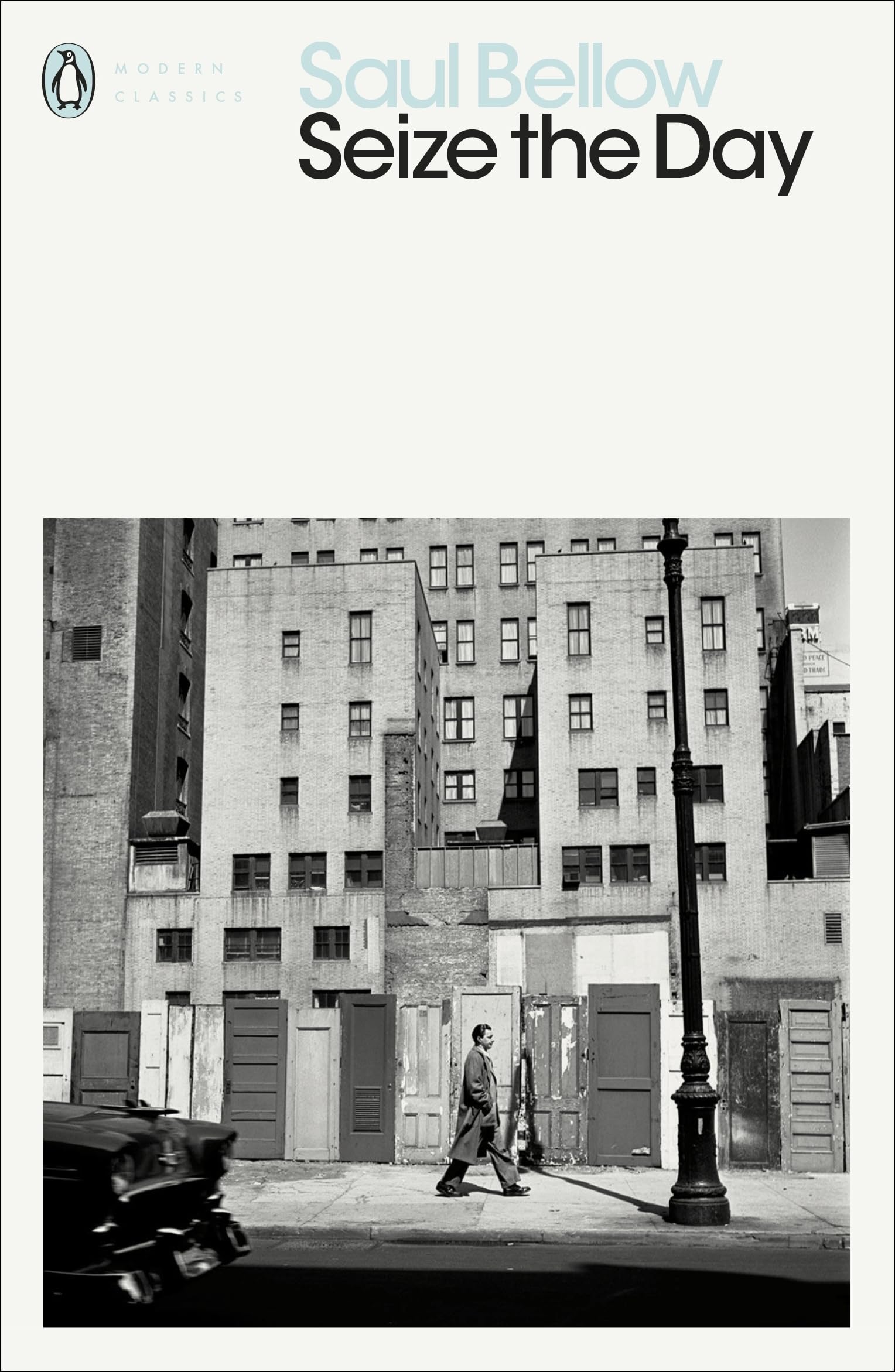
Seize the Day, Saul Bellows
Whilst not being considered Bellow's best work, Seize the Day is short and accessible, best enjoyed in a lazy summer haze that encompasses the titular day. It's psychological, with some of the most well-written erudite prose I've read. It's so pertinent now: as modern masculinity has fallen into crisis, as traditional gender norms no longer impose themselves in a confusing, transient, and increasingly technocratic world, despite reaction gripping the West, as protagonist Tommy Wilhelm struggles with both his external and internal issues. Bellow is able to render the figure of the fail-son, the bum, the loser man so well despite writing the novel in the 1950s, as well as his Kafkaesque relationship with his father. It's forensic and packs so much into its short 128 pages.
Aditi Mehta, Deputy Editor-in-Chief & Books Editor
The Psychology of Money, Morgan Housel
Yes, your darling Books Editor is cognisant of her personal finances and, day I say, thinking about the future. The beauty of Housel’s book, especially for someone who learns through stories, is how he frames the approach to money as just that: a narrative led by mindset. To be financially responsible does not require complex, excessive understanding. It requires humility, restraint, and adaptability. The ‘psychology of money’ isn’t really about numbers, it's about life itself: your goals and successes are defined by metrics of your choosing, subject to your circumstances. Explained in a clear and accessible, reading The Psychology of Money is an investment that will yield lasting value.
Hanna Irzyk, Science Editor
Cloud Cuckoo Land, Anthony Doerr
Cloud Cuckoo Land is a wild journey through the points of view of several characters spread out throughout human history, connected by their love for an ancient story. Each lively, unique, and brilliant character breaks out of the systems surrounding them. Resolutely hopeful, yet full of tragic inevitabilities, this piece of historical fiction made me empathize with viewpoints I did not think I could. Notable highlights were the first ever description of a sunset to make me cry, a children's play, the fall of Constantinople – all throughout providing the reminder of the power of a story.
Isa Duchovny, News Co-Editor
Humankind: A Hopeful History, by Rutger Bregman
Rutger Bregman, Dutch historian and author, sets out to convince the reader that humans are inherently good.
Framed by Hobbes and Rousseau's opposing views of human nature, Bregman uses a variety of anecdotes and studies to disprove the cynical view of human nature that is becoming increasingly easy to believe from the news. At times, his arguments feel over generalised and too good to be true, but overall Humankind is a fascinating, thought provoking, and hopeful read.
Nadeen Daka, Comments Editor
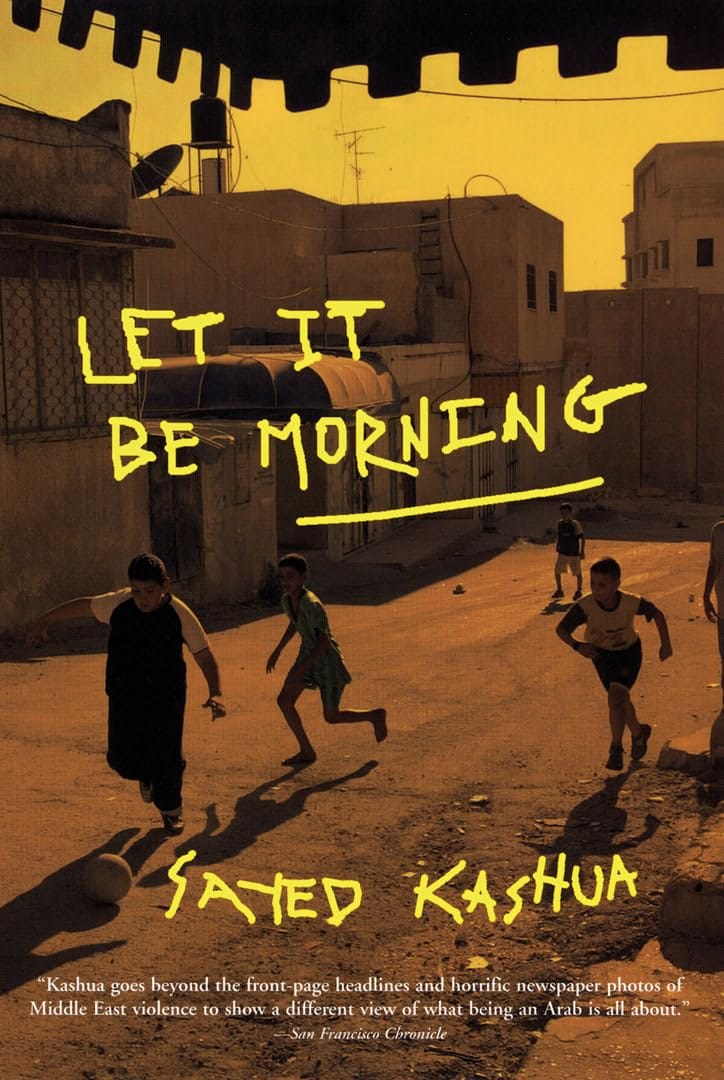
Let It Be Morning, Sayed Kashua
Sayed Kashua's Let It Be Morning is a sharp, unsettling novel that follows an Arab-Israeli journalist who returns to his childhood village, only to find it suddenly surrounded by an army. What begins as a personal homecoming spirals into a portrait of fear, isolation, and the uneasy fractures within a community under siege.
I initially picked it up because it mirrors the questions I often circle back to during my own summers — how we return to our roots, how communities both hold us and test us, and how culture is something you live rather than something you inherit. It’s the kind of book I would recommend to anyone who wants to think more deeply about identity, home, and times of uncertainty.
Cristina Carrillo, Science & Technology Co-Editor
The Dogs of Riga, Henning Mankell
As a long-time fan of crime novels, I had been looking for one that had a more creative spin on the classic whodunnit. Picking up Mankell's 1992 The Dogs of Riga was a fabulous decision: it takes a particularly talented author to mask a pertinent political commentary in such a gripping plot, all following a detective who is as witty as he is authentic.
Discovering two bodies in a life raft washed up to the Swedish shore leads detective Kurt Wallander to travel to Riga, a city where political chaos exists in the form of silence, secrets and surveillance; his investigations further complicated by the notable technological delay in comparison to the Nordic countries at peace. Mankell's talent definitely lies on capturing the eeriness of a time of such political tension, threading moments of sarcasm, love, and humour through the story of citizens amidst of loss, a balance much like life itself.
Begüm Yener, Societies Editor
The Song of the Cell, Siddhartha Mukherjee
If you’d like to read about the history of modern medicine through the perspective of a cell, this is your book! While Mukherjee can be self-indulgent at times, The Song of the Cell is a very engaging (and accessible) book. There are a lot of great anecdotes from Mukherjee and his conversations with Nobel Laureates, which connect the cellular therapies we use in medicine daily to scientific discoveries. I have heard Mukherjee’s Emperor of All Maladies, a ‘biography’ of cancer, is equally good for interested readers.
What did you read this summer? Contact books.felix@imperial.ac.uk to tell us!