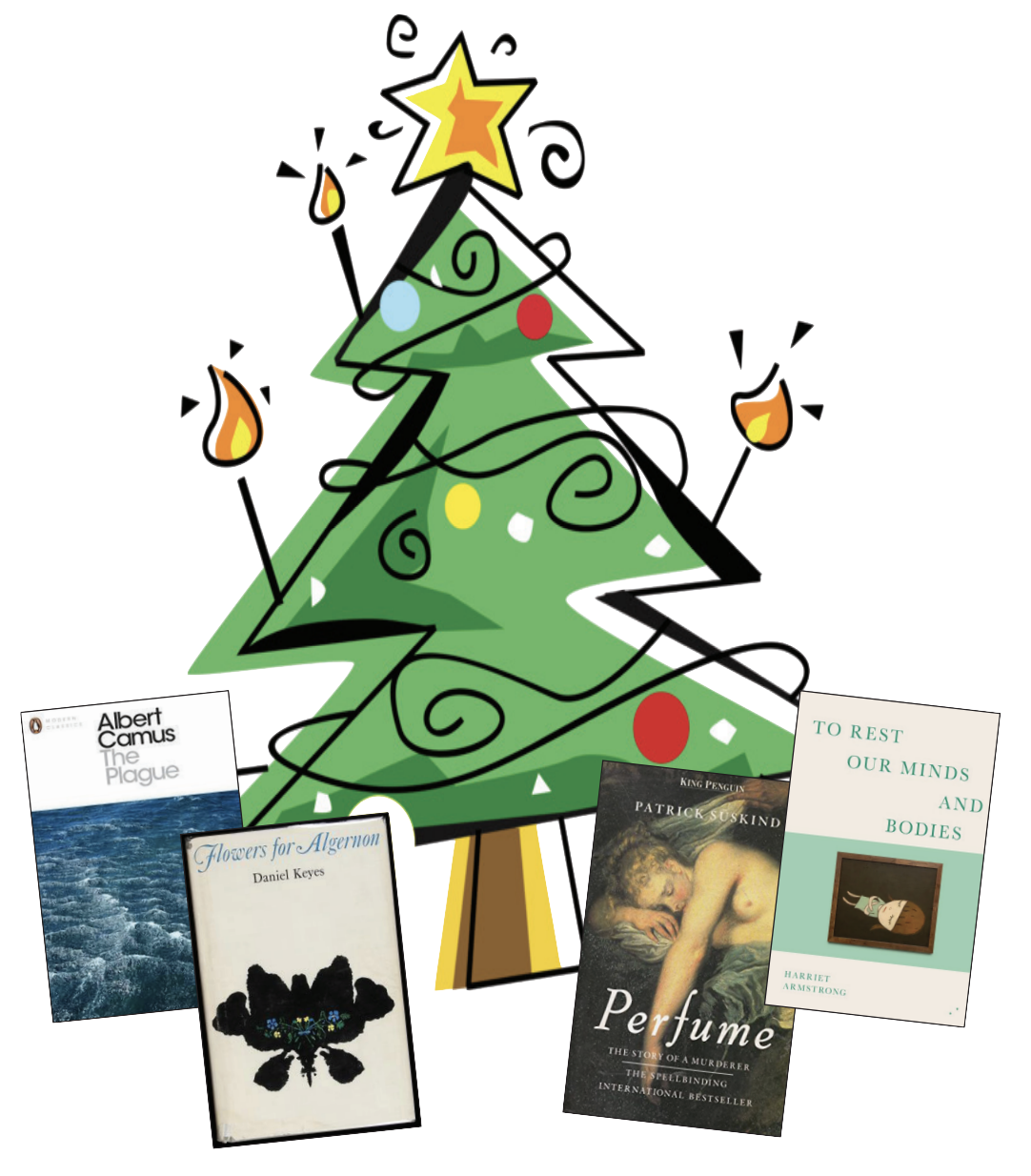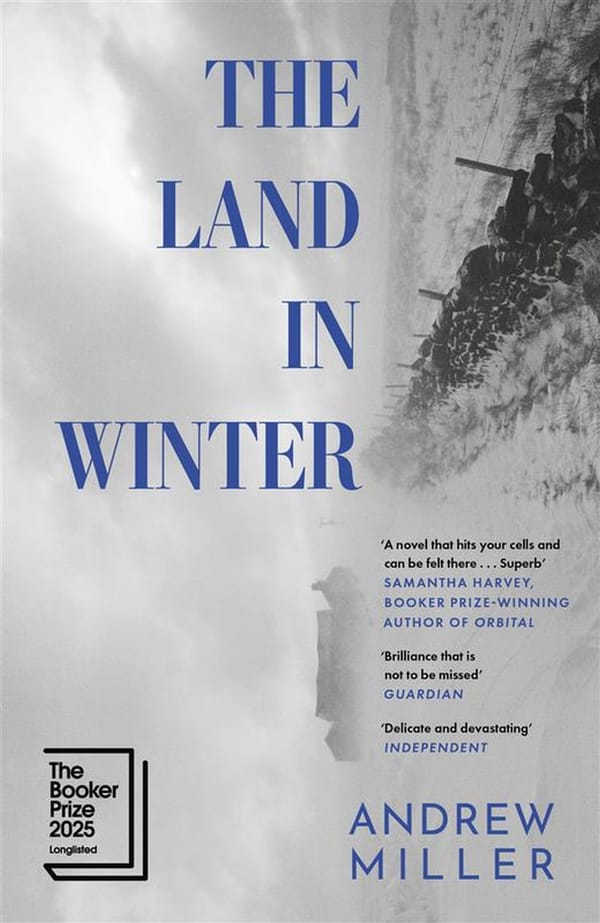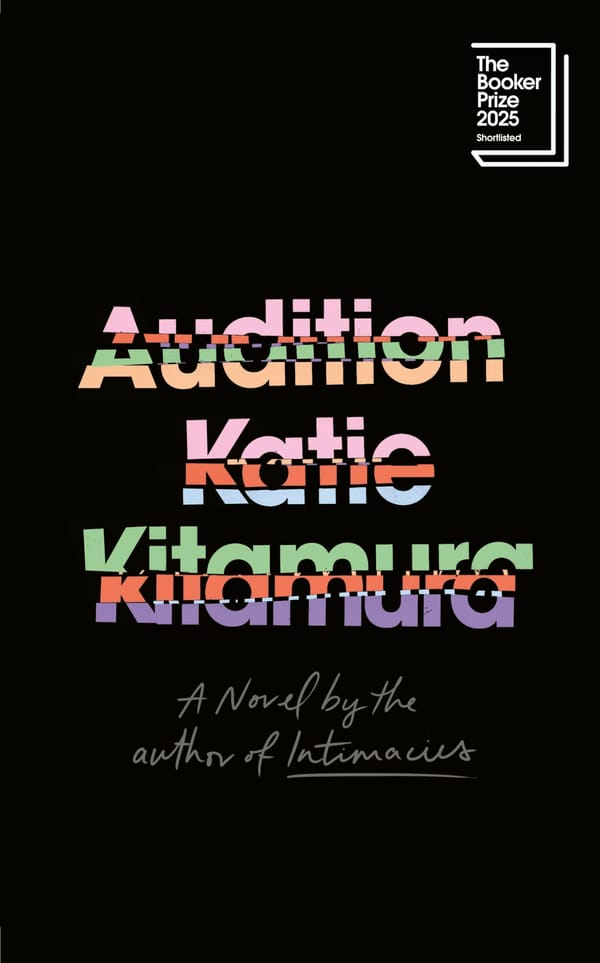
What book was under your tree?
The Felix Editoral Team review one book they read over Christmas break.





Nadeen Daka, Comments Editor
Flowers for Algernon by Daniel Keyes
Flowers for Algernon follows Charlie Gordon, a man with an intellectual disability who undergoes an experimental surgical procedure designed to increase his intelligence. The novel is structured as a series of progress reports written by Charlie himself, allowing us to trace his cognitive transformation through the evolution of his language, grammar, and self-awareness. As Charlie’s intelligence grows, so does his understanding of the world around him.
I found myself repeatedly returning to one thought of his in particular: “I am afraid. Not of life, or death, or nothingness, but of wasting it as if I had never been.” The quote, unsettling in its simplicity, made me more mindful of how I want to spend my Christmas break – not as time to simply pass, but as time to live deliberately
Mohamed Majlisi, Editor at large
Perfume: The Story of a Murderer by Patrick Süskind
For Christmas, my girlfriend and I bought each other a book we thought we would like; she got me Perfume by Süskind. I devoured Perfume like it was a lingering scent, in three days. It has a beautiful, fairy tail-esque quality, written in a fantastical, meandering way. I’m reading Thomas Mann’s Doctor Faustus, and the quaint Germanism shines through Perfume. The ending is batshit, nor is there really any psychological depth to the novel, as is implied by online reviews. In fact, I quite appreciated the materialist interpretation of why Grenouille was the way he was: trauma, abuse, alienation, and above all a mutated nose. The ending felt almost rushed, incomplete: like a scent it was volatile, reaching its crescendo in only a few pages. However, for its pure aesthetic quality, Perfume is a wonderful read.
Begum Yener, Societies Editor
To Rest Our Minds and Bodies by Harriet Armstrong
I picked up this book when I was in Paris at the famous Shakespeare and Company. I know one shouldn’t judge a book by its cover, but I found the title artwork by Yoshitomo Nara really compelling. This book is about a “vaguely disembodied cerebral girl” – a young woman in her last year of university facing alienation and meaninglessness. It is a very honest, raw book that resonated a lot with me and if you have previously read Elif Batuman’s The Idiot, it is quite comparable.
Guillaume Felix, Editor-in-Chief
The Plague by Albert Camus*
An extraordinary plague forces the French Algerian city of Oran into an increasingly repressive lockdown, and the population’s initial disbelief makes way for a multitude of clashing stances. What degree of freedom restriction is permissible to fight this scourge? Should information be withheld from the masses to maintain public order? Is fleeing the city to reunite with loved ones ethical, when medical volunteers are needed inside?
Reading The Plague is like drawing tarot cards: it gives a fresh perspective to whatever contemporary or historical issue the reader has in mind – critics have alternatively seen the titular plague as a metaphor for totalitarianism, global warming, colonialism, or literal pandemics.
*Camus disclaimer: the only female characters are the protagonist’s mother and girlfriend
Aditi Mehta, Deputy & Books Editor
Sputnik Sweetheart by Haruki Murakami
I first read Sputnik Sweetheart this time of year, four years ago. Revisiting the novel, I can see why my 16-year-old self was so enthralled, and I think much of that allure – driven by its elusiveness – still stand. With the sensibilities of age, I am more critical and less taken in by Murakami. I am more experienced with and less afraid of the loneliness he portrays. I have more certainty in who I am, and am less inclined to typecast myself as a Murakami archetype.
Yet, all things considered, I am not disillusioned. I still found its contents dangerous: reading about the enigma of one's soul, body, and wholeness, toys with your sense of physical being. I lost myself, perhaps, like Sumire, like Miu, like Carrot, for the 36 hours I relived and relentlessly consumed Sputnik Sweetheart.