The Artemis II mission and what “moon joy” says about ourselves
NASA’s Artemis program successfully conducted its second mission, a crewed lunar flyby, from 1st to 11th April – a monumental technical achievement sending humans further than we have ever been from planet Earth. Each crew member respectively made history by expanding representation in historic space exploration, with the oldest person (Reid Weisman), first woman (Christina Koch), first non-US citizen (Jeremy Hansen), and first person of colour (Victor Glover) to break out of Low Earth Orbit in our species’ history.
Inside the Artemis II mission
The craft is split into two major components: the Orion module, nicknamed “Integrity”, and its carrier, the Space Launch System (SLS), affectionately called the “Big Orange Rocket”.
The first manned flight into space in the Orion capsule demonstrated remarkable improvements in the technical capabilities of the vessel, breaking Apollo’s distance record and working with computers processing more than 20,000 times faster. Significant upgrades to the liveability of the spacecraft are of note too, including a much larger habitable volume for astronauts, a specially engineered private “lunar loo”, and accessible design made to accommodate close to 99% of body types rather than exclusively for military men. Also, Artemis II featured a significantly innovated nutrition plan accounting for hydration and taste differences in low gravity, as well as incorporating pragmatic changes to make food in space cleaner, longer lasting, but also more multicultural – especially heavy on tortillas!
Larger than the Apollo capsules, Orion’s recovery and exposure to heat and radiation have been addressed with improvements to shielding and materials, but weight has been a looming issue for nearly two decades. On paper, the SLS is the strongest rocket NASA has ever built. It also suffers from being single-use and trails the Saturn V in payload capacity despite nearly 60 years of research and massive improvements to reusable-rocket systems in the private sector.
The rocket itself poses technical restrictions that forced the lunar trajectory (NRHO) taken by Artemis II, since a separate lander would have been required for touchdown. Tied to the inefficiency of the Big Orange Rocket is its upper block, the Interim Cryogenic Propulsion Stage (ICPS), intended for use in translunar injection, which is the final major burn to transfer from a far Earth orbit to a far Moon orbit. Another expensive, expendable system, the ICPS suffered issues with helium piping that could not be fixed on-site in the months leading up to the launch. NASA leadership, particularly Administrator Jared Isaacman, have expressly tried to get rid of the ICPS and even to move away from the SLS for future launches as part of a bid to restructure the organisation.
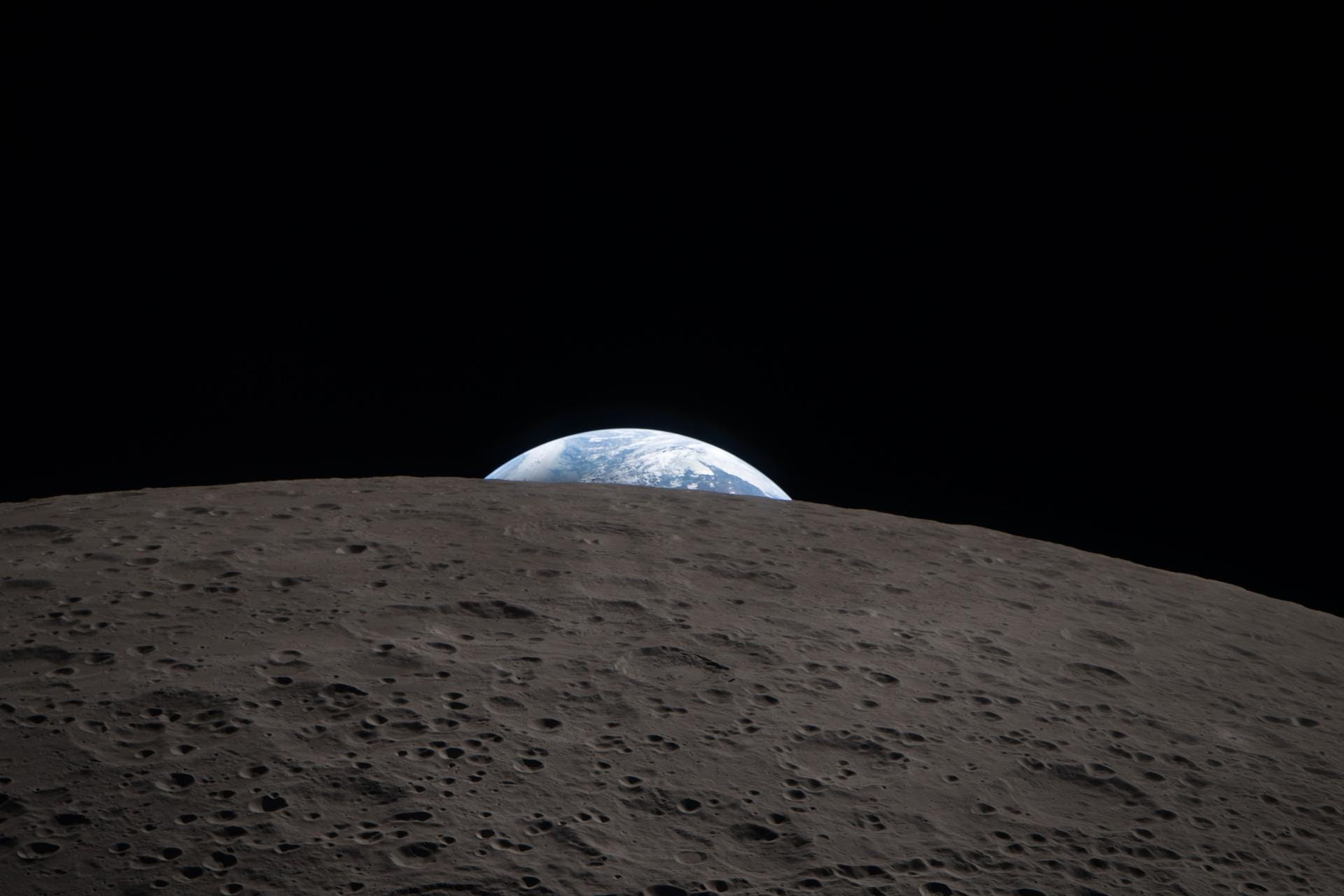
The lasting impact of this mission marks the transition of space exploration from novelty to a permanent feature of design and research. Together with private ventures of the past half-decade, it is the precedent to commercial landers planned for Artemis III in 2027, and landing manned missions on the moon, with Artemis IV in 2028 and onwards, to establish lunar bases. The stated goal of these bases is to develop nuclear power in space and to facilitate further travel to Mars from lunar orbit. Among the experiments carried out while the astronauts were in deep space, were tests using the AVATAR and ARCHER payloads, and studying organ-on-a-chip devices and bio-monitors to analyse human physiology in space in unprecedented and intriguing ways. NASA’s social media pages began referring to the collective excitement around the mission as well as the astronauts’ own euphoria in space (the so-called overview effect) by coining a particular phrase: “Moon joy”, defined as “the feeling of intense happiness and excitement that only comes from a mission to the Moon.”
On triumphantly returning to our planet, the astronauts described themselves as linked by an experience that “no earthly language can fully contain”, with commander Wiseman relating that Artemis “wanted to go out and [try to] bring the world together.”
With such overwhelming curiosity and buzz about each facet of the mission, it feels impossible to soberly look at the bigger picture. This article is written in tandem with an upcoming piece considering NASA’s role as a defence, propaganda, and climate institution under the Trump administration to better understand the consequences of the new space age.
There is, I believe, no guilt in Moon joy: we are trying to accomplish for only the second time what was written in epics of old, and in the years to come man may set foot on the red planet. Artemis II was an imperfectly designed mission, challenged by bureaucratic deadlock and the impossibilities of rocket science. Still, it took on a brave, fresh face for humanity, challenged the final frontier, and won. Looks like the ‘70s are back!