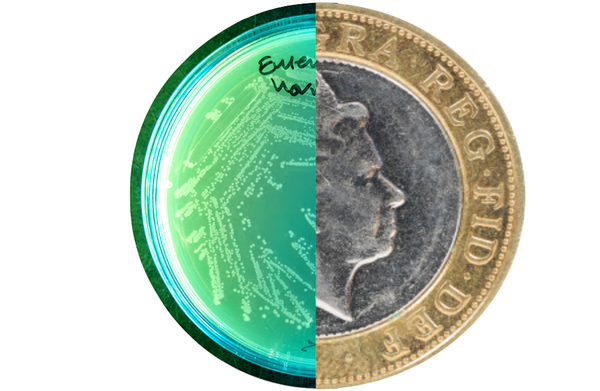
“Whatever crazy idea we can test, we make it happen”
Imperial spinout 2D Nano is developing novel and sustainable ways to manufacture advanced materials.

Concrete is the second most used material in the world after water, with three tonnes of concrete used per person per year. The cement industry – cement is a key ingredient of concrete – currently produces up to 8% of global CO2 emissions. At the same time, concrete plays a key role in building infrastructure to address climate change and population growth. 2D Nano, an Imperial spinout, offers a sustainable and environmentally friendly alternative to cement using graphene.
2D Nano’s focus is producing advanced two-dimensional (2D) materials, such as graphene, boron nitride, and molybdenum sulfide, for a wide range of applications including concrete, batteries, coatings, composites, and thermal fluids.
The company is led by Dr Andrius Patapas, Professor Omar Matar, and Professor Camille Petit, from the Department of Chemical Engineering, and Dr Jason Stafford, from the Department of Mechanical Engineering at the University of Birmingham, formerly a member of the Matar Fluids Group.
The team won the Imperial Accelerator Grant in 2022 and worked with Dr Alalea Kia, from the Department of Civil and Environmental Engineering to study how 2D Nano’s graphene behaves in certain concrete recipes.
“A lot of engineering effort has been put from engineers with various backgrounds,” said Patapas, 2D Nano’s CEO. “It’s just a collective mindset that made this progress real for 2D Nano.”
At present, the company mainly produces graphene, a single layer of carbon atoms arranged in a 2D hexagonal lattice. First isolated in 2004 by Andre Geim and Konstantin Novoselov at the University of Manchester, graphene exhibits remarkable strength, and electrical and thermal conductivity.
2D Nano has developed a unique, patented technology to produce graphene from graphite, the material found in pencil lead. They use a Taylor-Couette system, composed of two concentric cylinders, one of which is stationary and one which rotates at thousands of revolutions per minute. A mix of graphite flakes, water, and a stabilising agent, such as surfactant, is pumped into the narrow gap between the two cylinders and the shear force created from the velocity difference between the two cylinders is used to slide sheets of graphene away from the graphite.
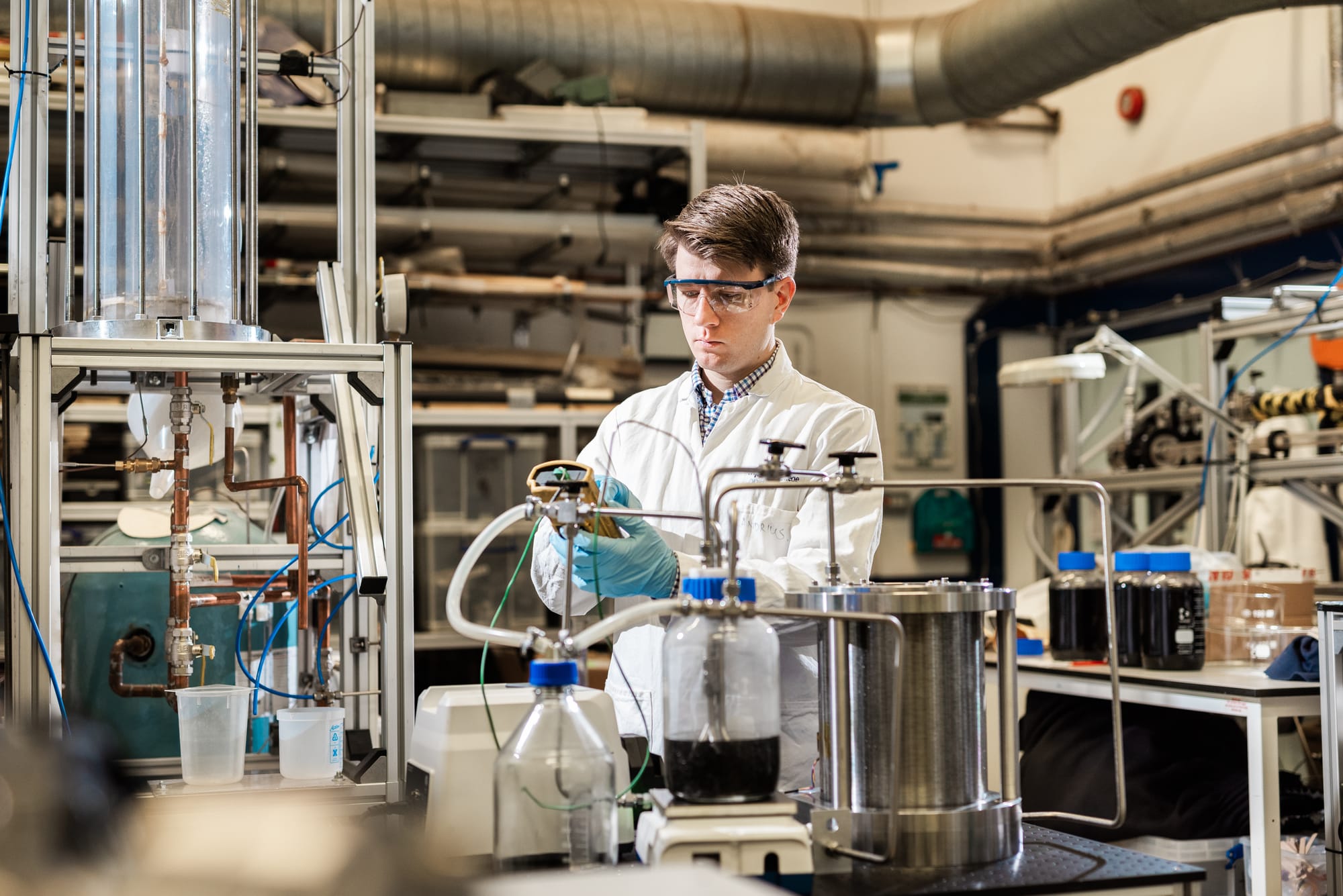
2D Nano’s technology is unique because they can produce a variety of specific graphene particle sizes in a sustainable way.
“The carbon footprint of the graphene that we produce per kilogram basis is the lowest in the market, and we don’t use any nasty toxic chemicals, so it’s very sustainable and safe,” explained Patapas.
The company secured £2 million from private investors in its 2024 seed round. They will be opening a facility this summer in Grapht Works, a facility dedicated to pilot and demonstration manufacturing that Imperial recently launched.
The addition of graphene to concrete increases the material’s structural strength, primarily compressive and flexural strength by as much as 100%, which in turn allows to substantially reduce the amount of cement needed.
“Ultimately, that makes the concrete products not only more profitable for the concrete manufacturers, but also more sustainable,” said Patapas. “The whole supply chain is being affected in a positive way,” he added, explaining that using graphene reduces transport and use of cement. Additionally, producing cement with graphene emits at least 40 to 60 kg less CO2 per cubic metre of concrete.
2D Nano is also exploring the use of this concrete to act as a supercapacitor for bulk energy storage. While a conventional lithium-ion battery can only be charged a couple thousand times, supercapacitors last over a million charging cycles. These large-scale concrete supercapacitors can be linked to renewable energy sources and used to replace diesel generators in rural areas, or lithium-ion batteries used to power off-grid products such as lampposts.
Another idea they are working on is creating wireless charging blocks for electric vehicles. The idea is that a car can drive over an underground concrete block the size of about five parking spaces and get fully charged within an hour. The concrete block itself can recharge within minutes.
“We go with the flow, to be honest, whatever we see, where the market is, whatever crazy ideas we can test, that’s what we do, and we make it happen” said Patapas. They are also testing the use of graphene in composites to make unmanned aerial vehicles (UAVs) more lightweight and durable.
2D Nano is also testing applications of other 2D materials, such as the use of boron nitride to develop thermal fluids with increased thermal conductivity to effectively cool data centers and high-performance computing, or the use of molybdenum sulfide for water filtration and desalination.
“We mainly focus on the ambitions where we can develop technologies that deliver from a practical perspective whilst enhancing sustainability,” said Patapas. “Anything that makes this world better, 2D Nano will be there.”